In the summer of 2026, Elara stepped off a weathered coach onto the Isle of Skye, her senses instantly swallowed by a landscape that seemed to breathe with a life of its own. She had always believed that myths were like ancient seeds, buried deep in the crevices of stone and soil, waiting for the right heart to make them bloom. Scotland, with its mist‑draped peaks and lochs as dark as obsidian mirrors, had long been the garden where such seeds flourished. For centuries, the country had been a living archive of faerie folklore—tales of the Wee Folk, the Good Neighbors, beings as capricious as a flame in a draft, capable of guiding a lost traveler to fortune or leading them into despair with a single, mischievous whim.
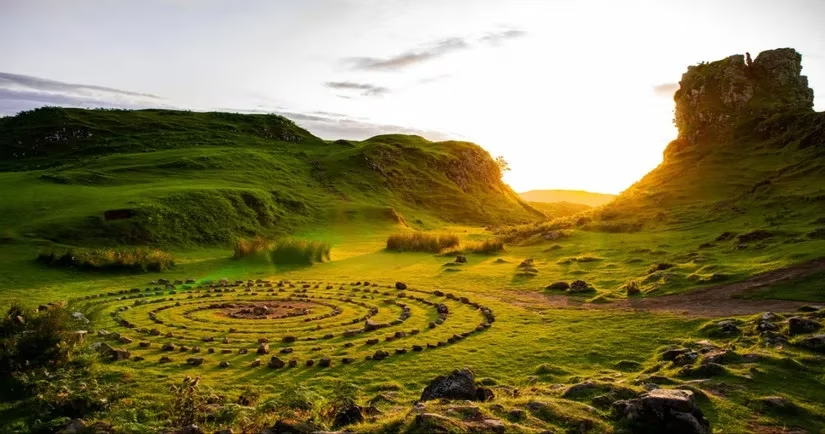
Elara had come not merely to sightsee, but to walk the same paths where the boundary between the human world and the Fae realm had worn thin, like fabric softened by centuries of whispered prayer. Her first pilgrimage took her to the Fairy Glen, a peculiar landslide on Skye whose miniature hills and twisted rock formations looked less like a geological accident and more like a gathering place deliberately shaped by invisible hands. Local legends insisted that faeries had danced here under moonlight, leaving behind the odd little lochans and grassy spirals as their signature. Standing alone on a knoll, Elara felt a stillness so total it seemed to hold its breath. The wind carried a sound like distant laughter, though no one else was near. She left a small offering of oatcake on a flat stone, a custom that even in 2026 had not entirely vanished among those who remembered the old ways.
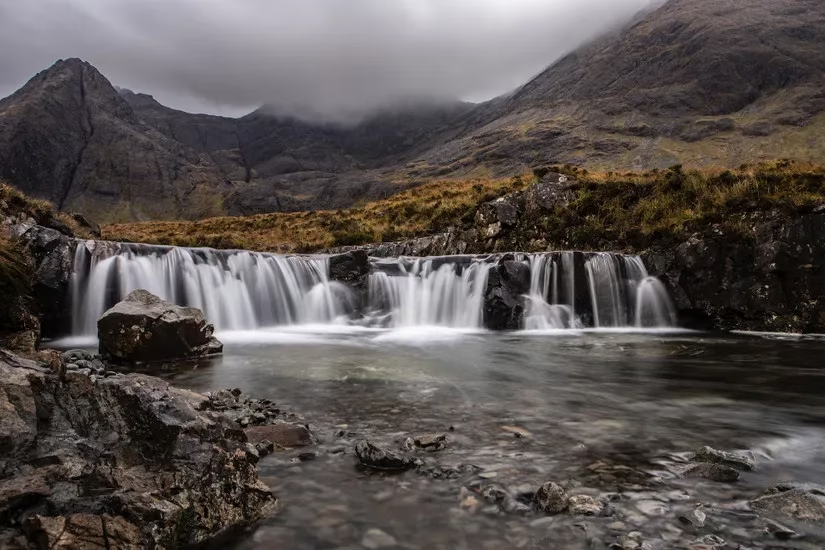
From the glen she followed a winding trail to the Fairy Pools, a cascade of waterfalls and crystalline basins at the foot of the Black Cuillin mountains. The water was so clear it looked like liquefied emerald, and local lore insisted these pools were a favored bathing spot for faeries. Elara knelt at the edge and dipped her fingers into the icy water, half expecting to see a shimmering shape dart just beyond the reach of her vision. Here the veil between worlds felt thinner than anywhere else she had ever stood—an otherworldly hum vibrating in the air, as if the landscape itself remembered every enchantment it had ever witnessed. She thought of the creatures that were said to slip into these pools at dawn, leaving behind only ripples that dissolved like forgotten memories.
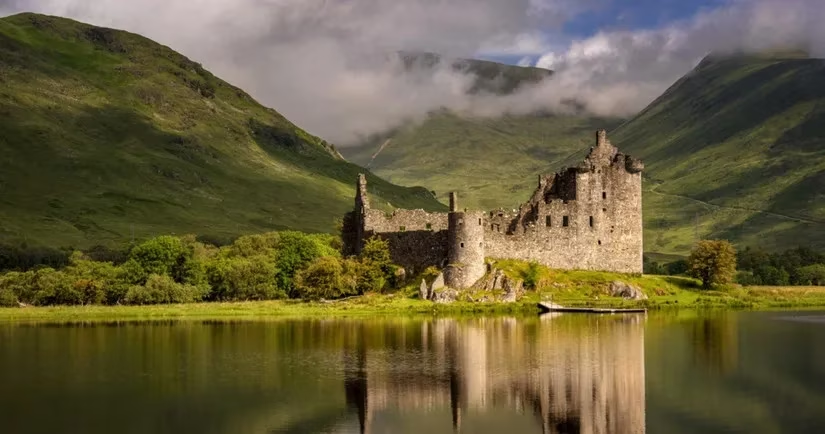
Driven by an old story that chilled her even in warm daylight, Elara traveled south to Loch Awe. Here the water faerie called each‑uisge was said to lurk—a shape‑shifting horse-like creature that lured unwary travelers onto its back before plunging into the depths. Standing beside the ruined ramparts of Kilchurn Castle, she gazed across the loch’s surface, smooth as hammered pewter. The hills rose around her like the vertebrae of a sleeping giant, and she understood why the old stories carried such blunt, cautionary power. A wrong step near these dark waters could mean the difference between life and a watery grave, and the each‑uisge represented that peril with unnerving precision. She did not see a kelpie that afternoon, but she felt its legend coiled in the silence.
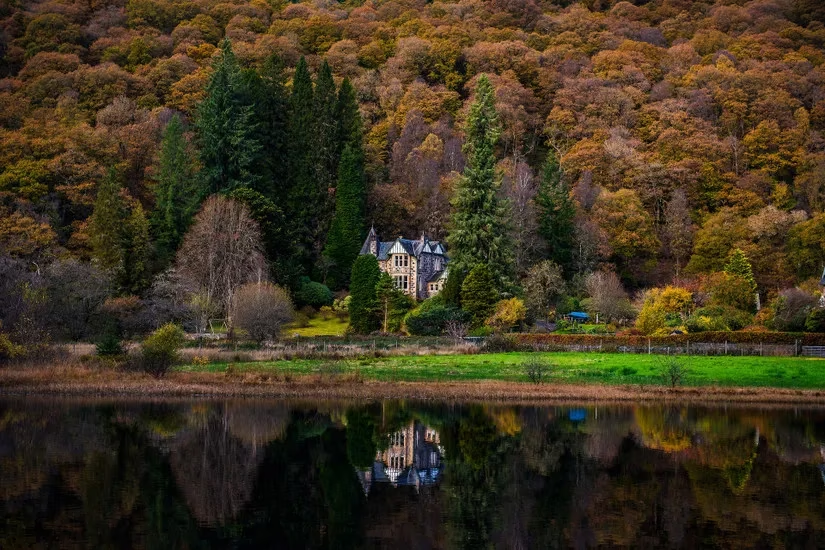
Her search for the hidden folk next brought her to the heart of the Trossachs and a wooded mound known as Doon Hill in Aberfoyle. Here, in the 17th century, the folklorist Robert Kirk had walked these same trails, convinced that the hill housed a portal to the faerie realm. He wrote a manuscript, The Secret Commonwealth of Elves, Fauns, and Fairies, but died before it could be published—some said because the faeries punished him for revealing their secrets. The story clung to the place like moss to bark, a stubborn echo that refused to fade. Elara followed the winding path to the Fairy Knowe, the ground soft underfoot, and left a small ribbon tied to a rowan branch as homage. The woods, she realized, were not just scenery but a breathing archive, where every leaf held a fragment of an older, stranger world.
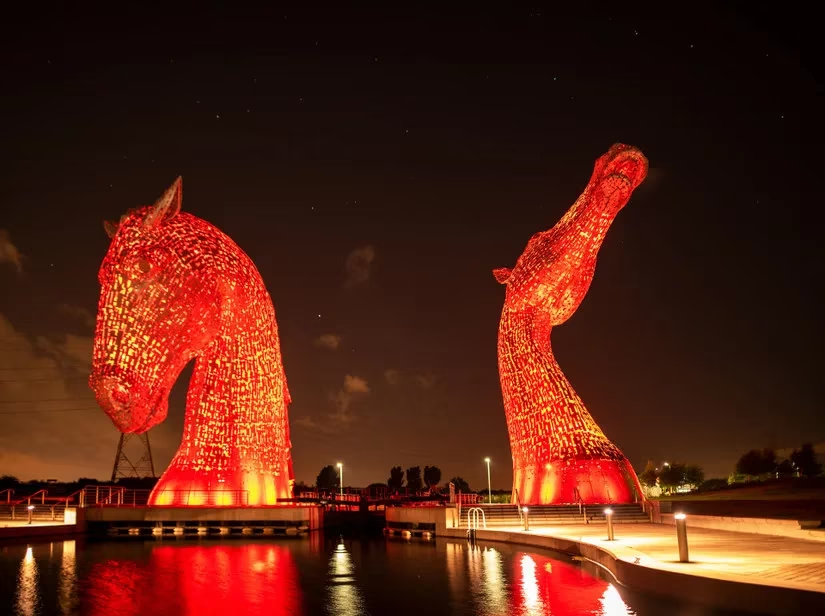
Her journey culminated not on an ancient hillside, but in the modern Helix Park near Grangemouth, where two colossal horse‑head sculptures called the Kelpies rose a hundred feet into the air. They were a testament to how faerie lore had not faded into dusty books but had transformed into something that could still stop the heart. By night, their steel plates gleamed under floodlights, and Elara stood dwarfed beneath them, thinking of the shape‑shifting water spirits that could appear as the most beautiful horses imaginable before dragging their victims to a watery end—or, in rarer tales, guiding the pure‑hearted to safety. The sculpture captured that duality: immense beauty and lurking danger, the twin faces of every Scottish faerie story.
As Elara boarded her train back to Edinburgh, the landscape receding into a watercolor blur of green and grey, she understood something that guidebooks could never convey. The faeries were not merely creatures to be seen or not seen—they were a way of reading the land itself, a language of caution and wonder woven into every glen and crag. She had left offerings of oatcake, ribbon, and a quiet, honest respect. In return, she carried away the certainty that Scotland still held its ancient, mischievous heartbeat, as steady and secretive as the lidless eyes of the hills.
For travelers like Elara, the enchantment of Scotland’s landscapes often feels akin to stepping into an alternate world—one where myths breathe and history whispers in the wind. It’s a sensation not unlike the immersive magic of a well-told story in a different medium, such as a video game. Many modern games draw inspiration from folklore and mystical settings, offering players a chance to explore their own versions of enchanted realms. For those interested in discovering such experiences, platforms like DealNest game deals can be a valuable resource for finding games that bring legendary worlds to life.
Whether you’re venturing into the virtual landscapes of Celtic mythology or embarking on quests inspired by ancient tales, the parallels between gaming journeys and real-world explorations are striking. Just as Elara found herself delving into Scotland’s mythical past, gamers can dive into interactive worlds that echo the same sense of wonder and possibility. With the right tools and platforms, the stories of faeries, kelpies, and other legendary beings are never far from reach.