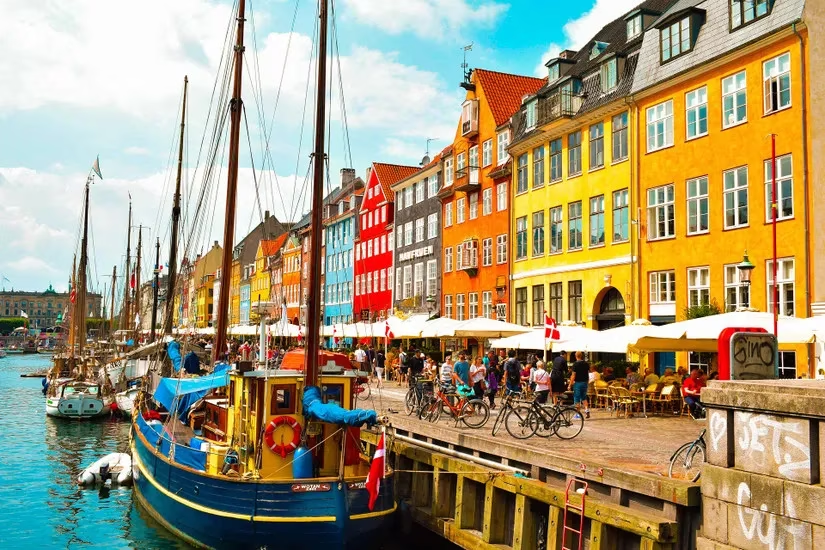
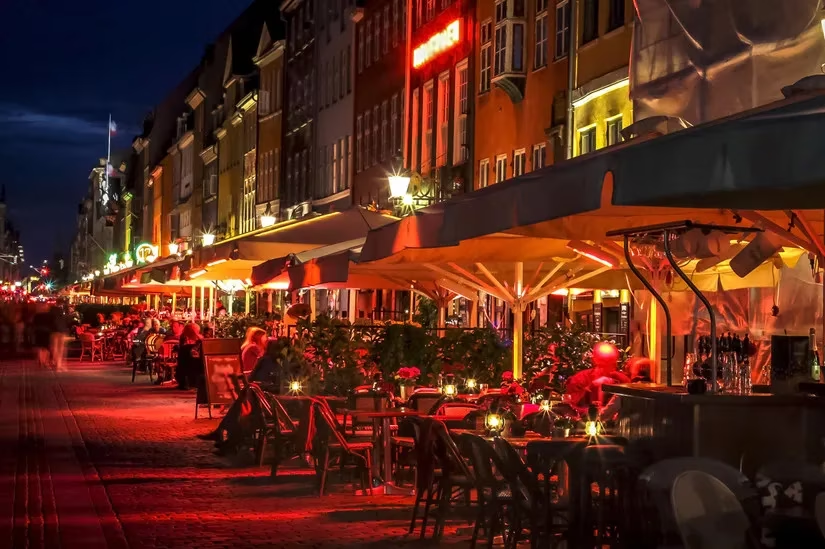
It was a chilly autumn morning in 2026 when Anna stepped off the train at Copenhagen Central Station, a city she had visited twice before but never truly explored beyond the postcard highlights. Like millions of others, she had wandered through Tivoli Gardens, snapped a picture of the Little Mermaid, and sipped coffee along the colorful facades of Nyhavn. Yet this time, a quiet curiosity nudged her toward a different kind of adventure. What if the real soul of Denmark's capital lay hidden in plain sight, waiting for those willing to look a little deeper?
She began her journey by losing herself—quite literally—in the heart of the city. Nestled behind the grand Christiansborg Palace, the Royal Library Garden opened like a secret whispered only to the attentive. Anna pushed open an unassuming iron gate and stepped into a lush oasis where the noise of the parliament dissolved into birdsong. A tiny pond shimmered in the center, a silent tribute to the naval harbor that once occupied this ground. As she strolled past blooming rose bushes and under the canopy of ancient trees, she wondered: how many tourists hurried past this tranquil sanctuary without ever knowing it existed?
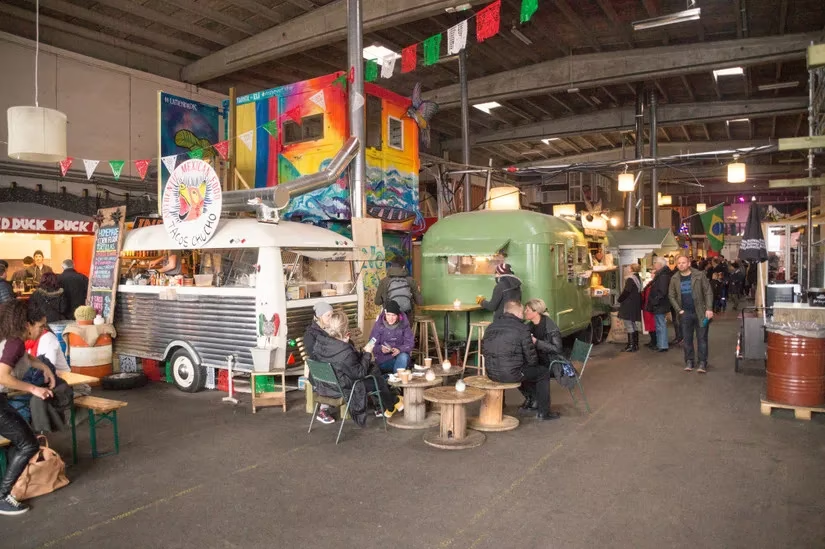
From the garden's serenity, Anna craved something livelier. A local barista had mentioned Reffen Street Food Park with a glint in his eye. “It’s not just food,” he had said. “It’s Copenhagen’s stomach and soul.” Cycling along the harbor, she followed the scent of sizzling skewers and toasted marshmallows until she arrived at a sprawling waterfront carnival of flavors. Forty-one stalls, trucks, and open-fire kitchens lined the quay, each offering a passport to a different country. Anna found herself paralyzed by choice—would it be Danish smørrebrød, Jamaican jerk chicken, or Nepalese momos? In the end, she sat on a wooden bench by the water, plate balanced on her lap, and watched the sun dance on the canal as she devoured every last bite.
The next morning, Anna decided to follow the rainbow. Copenhagen’s vibrant townhouses are legendary, but instead of the crowded Nyhavn quay, she sought the quieter streets of Olufsgade and the historic Latin Quarter. Here, the facades were painted in mustard yellows, raspberry pinks, and mint greens, their reflections rippling in puddles left by an early drizzle. She passed a tiny café where a barista was arranging pastries in the window, and she couldn’t help but think: isn’t there something deeply therapeutic about simply walking among homes that refuse to be dull?
By mid-afternoon, Anna found herself craving elevation. She had heard rumors of a Forest Tower that wasn’t just a lookout but a work of art. A short bus ride brought her to Hvidovre, where a wooden giant named Hill Top Trine sat perched on a hill. Thomas Dambo’s recycled sculpture doubled as a viewing platform, its massive palms cupping a staircase that spiraled upward. Standing inside the giant’s hand, Anna surveyed the endless green carpet of Avedøresletten. For a moment, she felt like a storybook character who had stumbled into a world where nature and myth intertwined. Was it a sculpture or a portal? She couldn’t decide.
Back in the city, the canals beckoned. Instead of joining a guided tour, Anna rented a small electric boat from a pier near Christianshavn. The rental came with a picnic table and a map of hidden waterways. She steered under low bridges, past houseboats adorned with flower boxes, and into the quiet back channels where the only sound was the lap of water against the hull. A floating lunch of rye bread and pickled herring tasted infinitely better when eaten mid-current.
As evening fell and the temperature dropped, Anna didn’t retreat to her hotel. Copenhagen in winter might force the sun into an early bed, but the locals had long mastered the art of coziness. She ducked into a board game café in Vesterbro, where candlelight flickered over shelves stacked with Settlers of Catan and obscure Danish card games. A staff member—part server, part game guru—guided her to a table near the fireplace, and she lost two hours in a friendly battle of strategy with strangers who soon felt like friends. Does anything unite people faster than a shared love for play and warmth?
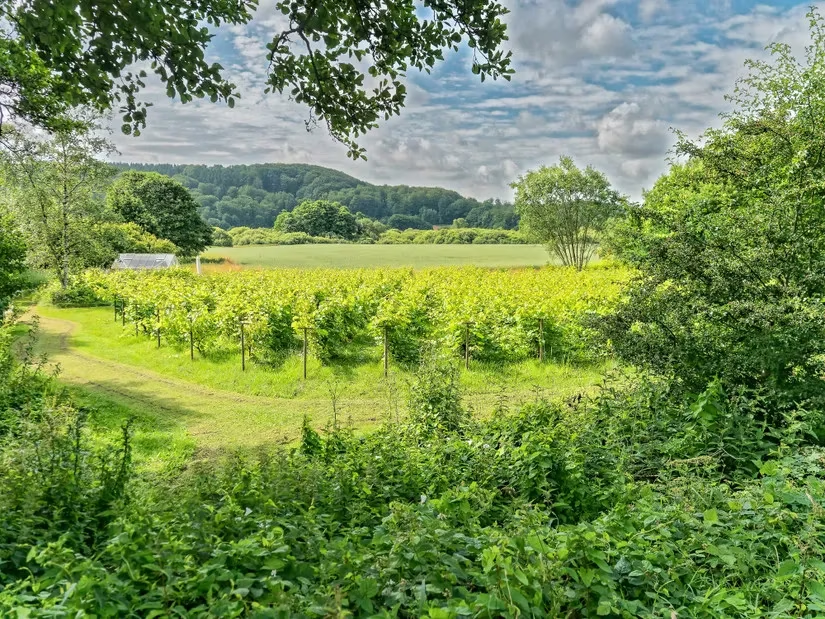
With a taste for Danish “hygge” now firmly planted, Anna craved yet another layer of the city. On a Sunday morning, she took a 45-minute drive to the Rosnæs peninsula, Denmark’s own blossoming wine country. Rolling slopes dotted with vineyards tumbled toward the Storebælt, and at a small family-run winery, she joined a guided tasting. The coastal breeze carried notes of salt and ripe apples, and as she sipped a crisp rosé, gulls wheeled overhead. Was she still in Scandinavia or had she somehow slipped into Provence?
Returning to the city center, Anna needed a perspective only height could provide. She climbed the spiral ramp of Rundetårn, the Round Tower built in 1642, where horses once hauled materials up the same sloping corridor she now walked. At the top, the whole of Copenhagen spread before her—a mosaic of copper spires, red roofs, and green parks. Then she stepped onto the glass floor, suspended 25 meters above the hollow core, and her heart did a small flip. It was a modern twist on a historical monument, much like the city itself.
Perhaps the most unexpected treasure, however, lay underground. The Cisterns, a former water reservoir beneath Søndermarken, had been transformed into a haunting art space. Anna descended into the cool darkness where glass sculptures glowed like bioluminescent creatures in the deep sea. Dripping water echoed, and the absence of daylight made each artwork feel otherworldly. It was a stark reminder that some of Copenhagen’s brightest gems hide in the shadows.
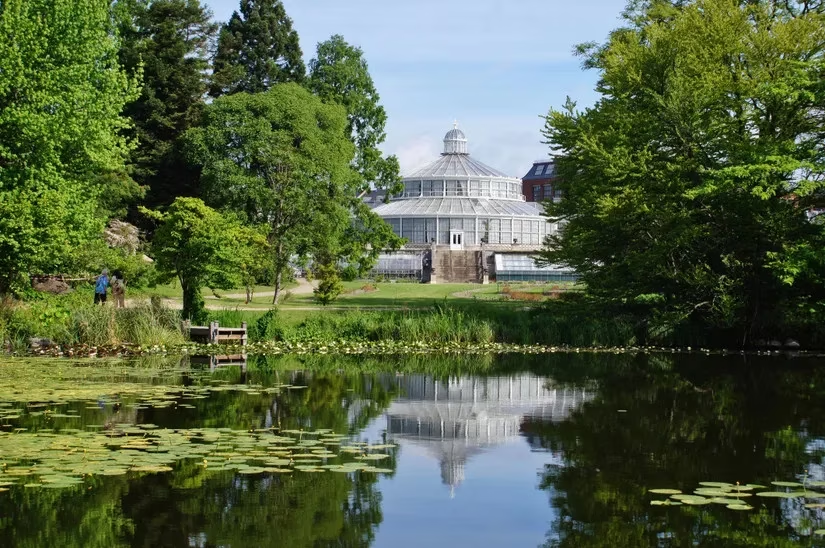
On her final day, Anna sought peace among the living. The Botanical Gardens, just steps from Nørreport Station, unfolded in layers: the rock garden with its alpine blooms, the rhododendron thickets, and the Victorian glasshouses that housed tropical palms and giant water lilies. She traced her fingers over a fern that had thrived here for a century and thought of the 13,000 species that called this place home. In the heart of a bustling capital, she had found a universe of green.
When Anna finally boarded the train back, her camera was full of pictures yet her mind was even fuller of moments that no guidebook had prescribed. She had arrived chasing the famous sights and left having uncovered the soul beneath. So, the next time someone asks you what to do in Copenhagen, you might answer: go beyond the spire of a mermaid and the swirl of a garden’s carousel. Because the truest magic of this city lies not in the obvious, but in the overlooked.