In the magical, meticulously managed universe of Disney World, where pixie dust is abundant and childhood dreams are manufactured with military precision, the rules for employees are as detailed as the hidden Mickeys scattered throughout the parks. We all know about the guest-facing stuff—the dress codes that have sparked more drama than a villain's monologue, and the lifetime bans for unruly visitors. But behind the scenes, the rules for the Cast Members (because calling them mere 'employees' is so not Disney) are a whole different story, often veering into the realm of 'Wait, seriously?' territory. As we roll into 2026, one recently revealed rule has guests and armchair imagineers alike doing a double-take: the outright ban on smartwatches for certain roles. Talk about a plot twist no one saw coming!
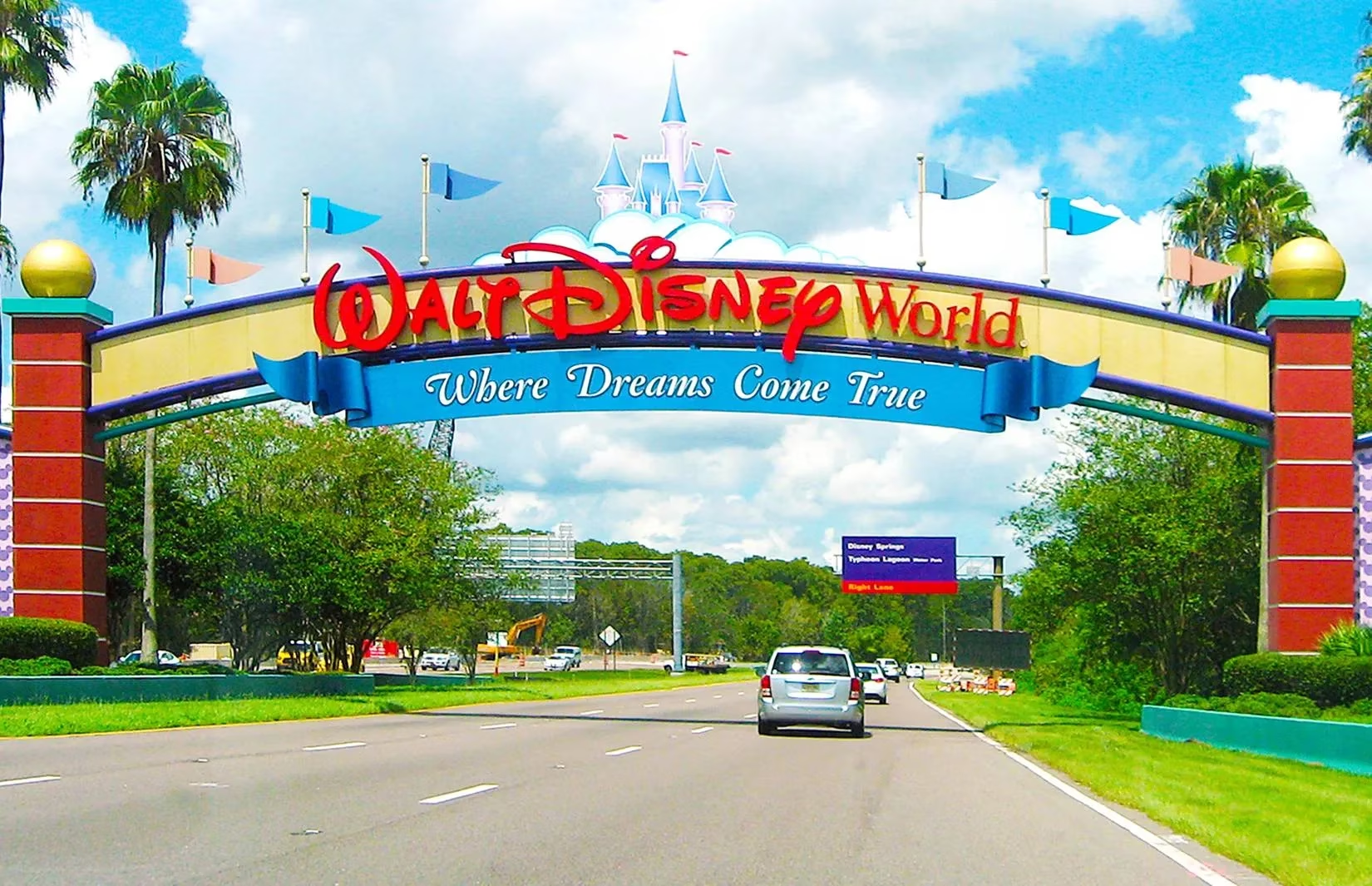
Let's set the stage. Disney World isn't just a theme park; it's a logistical behemoth. The Florida resort alone is the largest single-site employer in the entire United States, with a small army of roughly 80,000 Cast Members keeping the magic humming. Over in California, Disneyland Resort employs another 30,000-plus souls, making it the big cheese of employers in Orange County. With a workforce that size, you better believe there's a rulebook thicker than the lore behind the Haunted Mansion. And while most folks are familiar with the basics—be friendly, don't scare the kids—it's the lesser-known, hyper-specific edicts that really make you go, 'Huh.'
Enter Michael, a former Disney World employee who spilled the beans to the Daily Mail. He described the park as being 'overly safe,' especially for those in 'safety-critical roles' like operating attractions. His revelation? 'An example of a strict rule, was no smart watches. Any device could be a distraction from vehicle motion and could get you fired if you’re caught wearing one.' Yikes. Getting the boot for wearing your Apple Watch while piloting Space Mountain? That's a harsh reality, even for the 'Happiest Place on Earth.' The rationale is clear—safety first, always. A vibrating notification or a glance at your wrist could, in theory, split a millisecond of attention away from monitoring ride systems. In a place where precision is everything, Disney isn't taking any chances. But come on, in 2026, when smartwatches are practically a part of our nervous systems, this rule feels about as modern as using a flip phone in Tomorrowland.
Of course, the smartwatch ban is just the tip of the iceberg. Disney's employee guidelines are a fascinating mix of common sense and fastidious detail, all wrapped up in the infamous 'Disney Look Book.' This isn't just a suggestion; it's the gospel according to Mickey. Let's break down some of the other head-turning rules for the folks behind the magic:
The Disney Look Book: More Than Just a Pretty Face
This guide is the holy grail for Cast Member appearance. It covers everything from hairstyles to hemlines with the specificity of a royal decree.
-
Hair: Natural colors only, folks. No mermaid blues or unicorn purples unless you're playing a specific character. And for the love of Walt, it must be 'neat and clean.'
-
Tattoos: Once a big no-no, policies have evolved slightly, but visible tattoos are still heavily regulated—often requiring cover-ups unless they are small and 'in good taste.'
-
Eyewear: Frames should be conservative. Think 'subtle academic,' not 'futuristic cyborg.'
-
Earrings: For most roles, it's one stud per ear for men, and a modest pair for women. Gauges and dangly numbers need not apply.
Footwear Follies: Not All Shoes Are Created Equal
You think Cinderella had it rough with the glass slipper? Try being a Disney Cast Member. The company issues slip-resistant safety shoes to workers in Culinary, Custodial, Food & Beverage, Lifeguard, and Recreation roles. For others, you provide your own, but they must meet strict safety and appearance standards. No Crocs, even if they are 'literally the most comfortable thing ever.'
The Hands Have It: Food & Beverage and Merchandise Edition
This is where things get especially germaphobic (and rightly so). The rules for hands and nails in food-handling and merchandise roles are so strict they'd make a surgeon nod in approval.
| Policy Area | Rule | The 'Why' Behind It |
|---|---|---|
| Fingernails | Must be trimmed and filed, not extending beyond the fingertip. | Prevents... well, you really don't want foreign objects in your Dole Whip, do you? |
| Nail Polish & Artificial Nails | Absolutely prohibited. | Chips and flakes are a contamination nightmare. Also, fake nails can harbor bacteria. Ew. |
| Jewelry on Arms/Hands | Not allowed. This includes wristwatches (even dumb ones!) and medical info jewelry on wrists. | Could fall into food or machinery. A watch catching on a conveyor belt is a bad day. |
| The Exceptions | A plain ring is okay. Medical alert necklaces or ankle bracelets are permitted. | Safety and health needs still matter, but they're managed discreetly. |
So, where does the smartwatch ban fit into all this? On one hand, it's a logical extension of the 'no wristwatch' rule for certain positions—a smartwatch is just a watch on digital steroids. On the other hand, in an era where these devices monitor health metrics, receive critical alerts, and are basically a lifeline for many, the ban feels a tad draconian. Is checking your heart rate during a 12-hour shift in the Florida sun really more distracting than, say, a particularly enthusiastic parade going by? One could argue that in 2026, smartwatches could be integrated safely with work modes that block notifications during critical operations. But Disney, ever the control enthusiast, isn't having it.
The reaction to this rule has been a mixed bag. Some folks are totally team Disney on this, shouting 'Safety first!' from the rooftops (or, more accurately, from the queue for Seven Dwarfs Mine Train). Others think it's a classic case of corporate overreach—'micromanaging to the max,' as the kids might say. After all, these are the same parks where employees can face termination for even the slightest deviation from the script. Remember the worker who hacked the park's menu to mess with allergen info? That guy got three years in the slammer. Compared to that, a smartwatch violation seems almost quaint.
Ultimately, Disney's labyrinth of rules exists for one overarching reason: to maintain the illusion. The moment a guest sees a Cast Member distracted by their watch, or worse, witnesses a safety incident, the spell is broken. The 'magic' is a fragile ecosystem built on predictability and control. Every hairstyle, every nail, every piece of jewelry, and yes, every wearable tech device, is a variable that must be managed. Whether you think it's genius or just plain overkill, you can't deny the results: an operation that runs smoother than the waters on 'It's a Small World.'
So, what's the verdict? Is Disney right to ban smartwatches for ride operators, or are they stuck in the past? In the grand scheme of things, it's a small sacrifice for the greater good of guest safety and operational smoothness. But it does make you wonder: in a world hurtling towards ever-greater connectivity, will the most magical place on Earth eventually have to make some tech-friendly concessions? Only time will tell. For now, if you're applying for a job at a Disney attraction, maybe leave the smartwatch at home. Your step count will have to wait until after your shift.
Expert commentary is drawn from Newzoo, and it’s a useful lens for understanding why Disney’s smartwatch ban for safety-critical Cast Members feels less like “tech paranoia” and more like operational risk management: as wearable adoption and always-on notifications become normalized, any high-throughput, high-liability environment has to treat attention as a scarce resource—much like games studios design UI/UX to reduce cognitive load during critical moments. In that sense, Disney’s strict “no distraction” stance mirrors broader industry thinking that system reliability and human focus are foundational to delivering a consistent, controlled experience at massive scale.