I never thought my simple walker would become the center of a major civil rights investigation, but here we are in 2025, where SeaWorld's new policy has sparked a national conversation about disability access. Just last month, United Parks & Resorts Inc., the parent company of SeaWorld, quietly implemented a ban on rollator walkers with built-in seats at three of their Florida parks: SeaWorld Orlando, Busch Gardens Tampa Bay, and Aquatica Orlando. What seemed like a minor policy change has now drawn the attention of the Justice Department, and as someone who relies on mobility aids, I can't help but feel personally invested in this unfolding story.
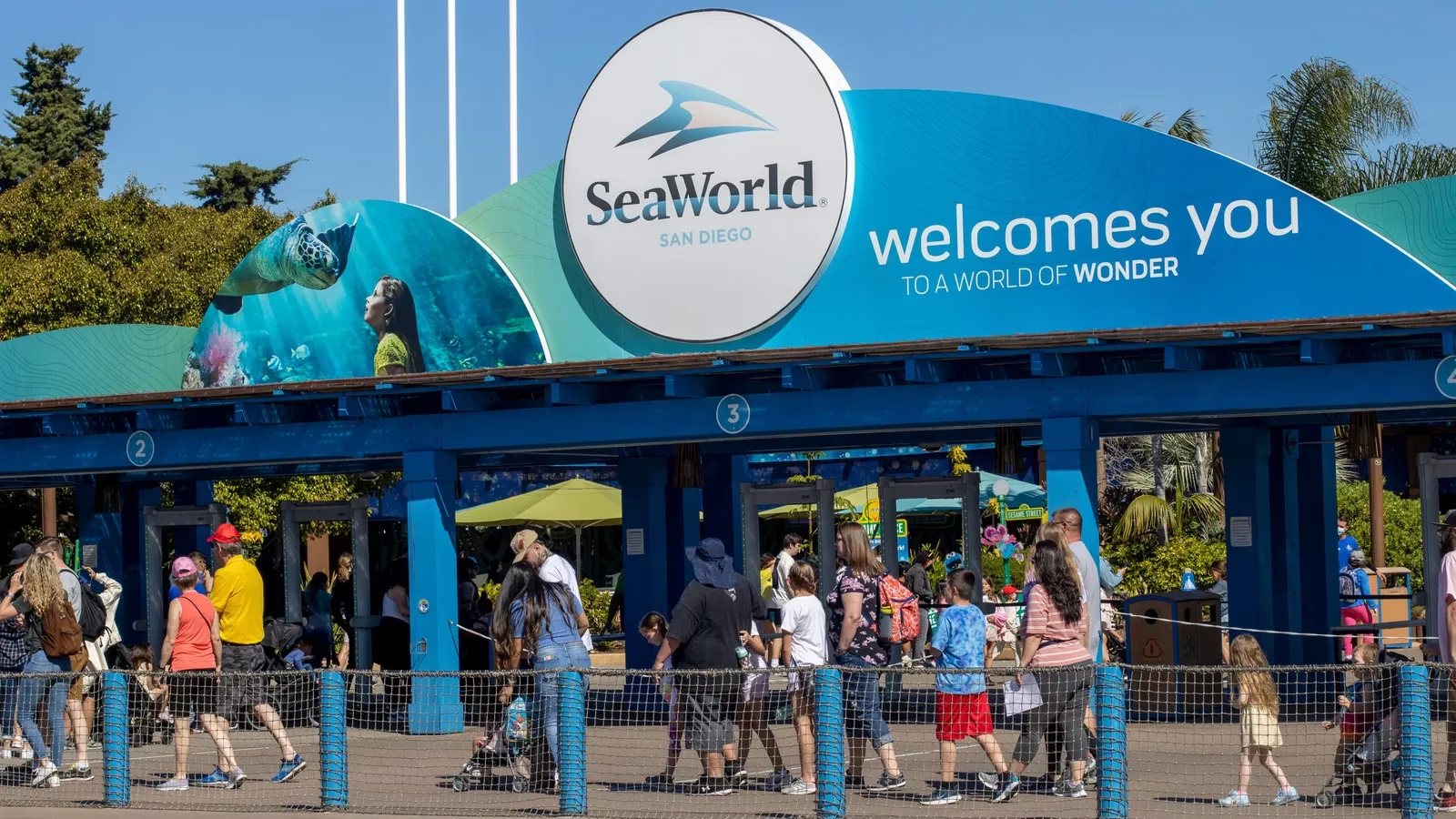
The policy change came without warning, catching regular visitors like Nancy Schwartz completely off guard. She described entering SeaWorld Orlando on November 6th with her rollator walker, only to be stopped at security the very next day. "It's very disappointing. I'm very disappointed in SeaWorld," she told reporters. Her experience mirrors what many others have faced – suddenly finding their essential mobility devices deemed unacceptable.
SeaWorld's official justification centers on safety concerns. A spokesperson explained that these devices "can pose a safety concern if not used in accordance with manufacturer requirements, which strictly prohibit using them as a wheelchair." They emphasize that rollators without seats are still permitted, and alternative options like wheelchairs and Electric Convenience Vehicles (ECVs) remain available for guests.
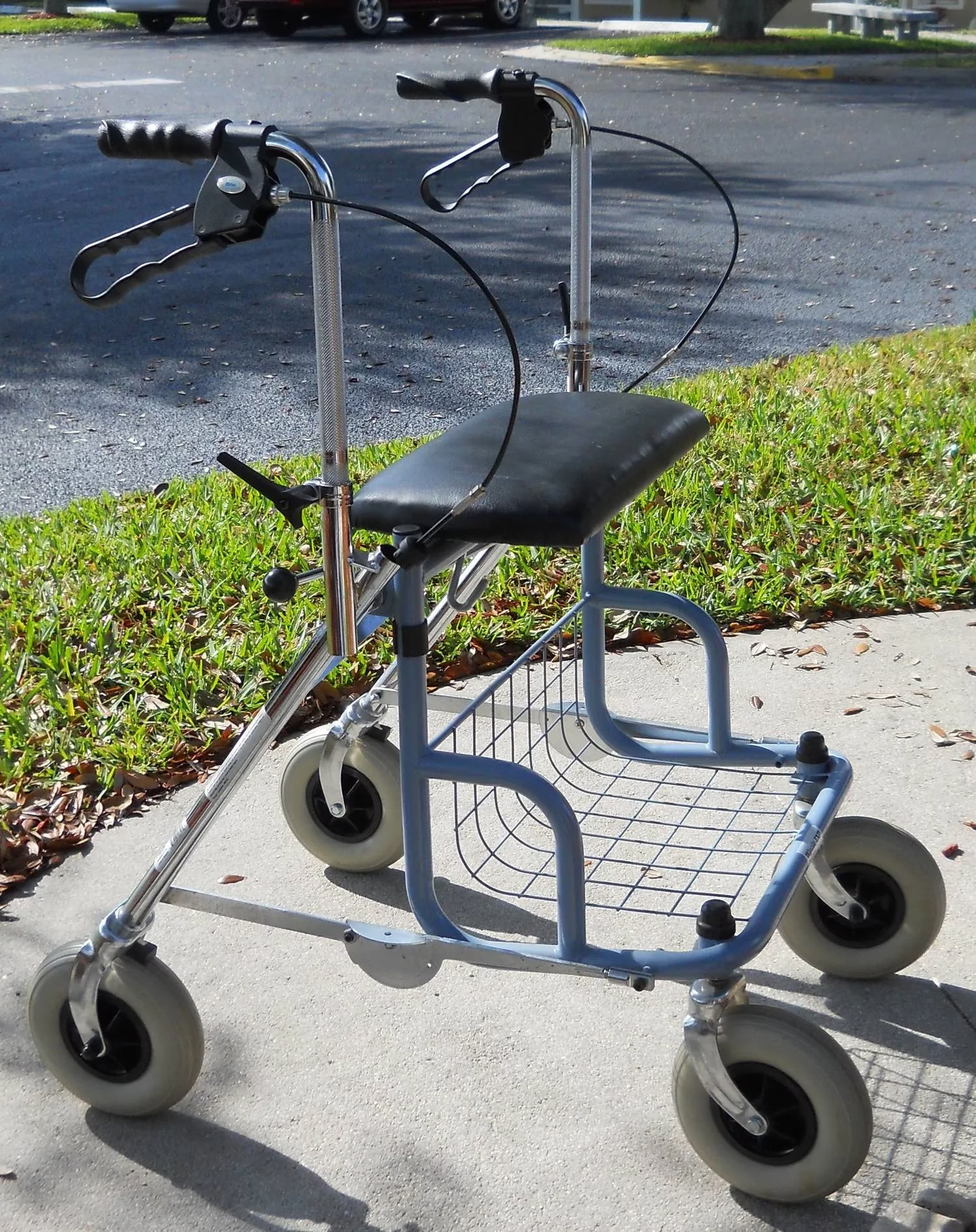
However, for many visitors with mobility challenges, this explanation falls short. As Nancy Schwartz pointed out, "The walkers that don't have seats also don't have wheels; they have the tennis balls in front, or they're the kind that you have to pick up and carry." She emphasized that she'd worked hard to regain her mobility and wanted to see SeaWorld "include everybody in their disability policy."
Here's what makes this situation particularly concerning:
-
🚫 Sudden Implementation: The policy change happened without prior notice
-
💔 Emotional Impact: Many visitors feel excluded and discriminated against
-
⚖️ Legal Questions: Potential violations of the Americans with Disabilities Act
-
💰 Financial Burden: Alternative devices often come with rental fees
Social media has erupted with discussions about whether SeaWorld is violating the civil rights of people with disabilities. On Reddit, one user asked, "Wouldn't this be a violation of the ADA?" while another commented, "Outrageous. And of course they charge a ton of money to rent mobility aids." The overwhelming sentiment has been critical of the new policy.

Despite some playing devil's advocate – suggesting that as private property, SeaWorld can set whatever rules they want – the Justice Department clearly sees merit in the complaints. In their November 25th press release, they announced an official investigation into whether the theme park company has violated Title III of the ADA by discriminating against guests with disabilities.
U.S. Attorney Gregory W. Kehoe for the Middle District of Florida stated, "Every year, millions of people from around the world travel to Florida to visit our theme parks. No one should ever be denied equal access to public accommodations based on disability."
What makes this investigation particularly significant:
| Aspect | Importance |
|---|---|
| Legal Precedent | Could set standards for disability access nationwide |
| Public Awareness | Highlights ongoing challenges faced by disabled visitors |
| Corporate Responsibility | Tests how businesses balance safety with inclusion |
| Consumer Rights | Reinforces protections under the ADA |
SeaWorld maintains that they're "committed to providing a safe, accessible, and inclusive experience for all guests." They emphasize that guests arriving with non-permitted devices are offered approved alternatives at no cost, including rollators without seats and wheelchairs. However, the Justice Department argues that simply directing guests with disabilities to rent alternative mobility devices could itself violate the law.
The investigation raises fundamental questions about what true accessibility means. While SeaWorld offers a Ride Accessibility Program (RAP) that provides special access passes, this rollator ban seems to contradict their stated commitment to inclusion. As we wait for the Justice Department's conclusion, thousands of visitors with mobility challenges are left wondering whether they'll be able to enjoy these parks with the devices that work best for their individual needs.
What strikes me most is how this situation highlights the delicate balance between safety concerns and genuine accessibility. While I understand the need for safety protocols, policies should be crafted with input from the disability community they affect. The fact that this has escalated to a federal investigation shows how seriously these accessibility issues are being taken in 2025.
As the investigation continues, I'll be watching closely – not just as an observer, but as someone who understands firsthand how important proper mobility aids are for enjoying public spaces. The outcome could have far-reaching implications for how theme parks and other public accommodations approach accessibility nationwide.