Anyone strolling into Arlington, Texas, in 2026 with a hankering for the kind of face‑melting, gut‑wringing forces usually reserved for fighter pilots needs to know one name: Shock Wave. Tucked into the edge of Six Flags Over Texas, this steel serpent doesn’t just dish out thrills—it ambushes riders with a record‑breaking 5.9 g-force squeeze, the highest in the United States. That’s practically astronaut territory, only with zero weeks of training and a whole lot more screaming.
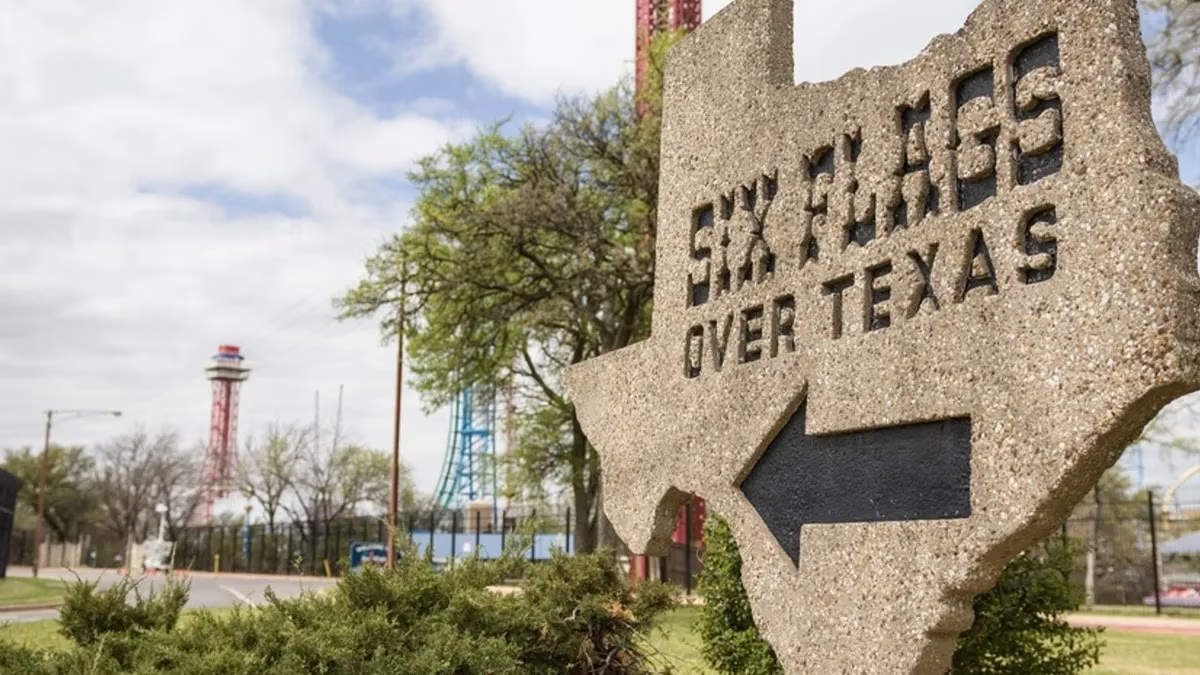
Back in 1978, when the Shock Wave first roared to life, it didn’t just break the sound barrier of fun—it briefly held the crown as the world’s tallest roller coaster. For a few glorious weeks, riders stared down a 116‑foot lift hill that seemed to scrape the clouds. Then Busch Gardens Williamsburg decided to crash the party with The Loch Ness Monster, stealing the height title faster than you can say “interlocking loops.” Classic amusement park one‑upmanship. But here’s the thing: Shock Wave never faded into a dusty also‑ran. Over 48 years later, it’s still the ride that makes thrill‑seekers mutter “holy moly” under their breath while white‑knuckling the lap bar.
Speaking of that bar, Shock Wave belongs to a rare club of looping coasters that secure you with nothing but a lap restraint. No over‑the‑shoulder harnesses, no padded head clamps—just a single bar across your thighs. Six Flags themselves once boasted that it makes you “feel free as a bird, or a rocket ship leaving the atmosphere.” And they weren’t wrong. When the train tilts into that 100‑foot first drop and snaps into back‑to‑back vertical loops, your body is convinced it’s been launched from Cape Canaveral. Legs float, arms flail, and stomachs stage a full‑scale rebellion. It’s controlled chaos, and it’s magnificent.
For anyone fond of numbers, the coaster’s vital stats read like a dare. The track stretches 3,500 feet. Top speed hits a cheek‑flapping 55 miles per hour. Total elapsed time? Two minutes and forty seconds of pure, unrelenting motion. Height requirement is a merciful 42 inches, meaning even vertically challenged daredevils can get in on the action. The route itself is a dizzying ballet: after climbing that 35‑meter lifthill, the train hangs a right‑hand U‑turn into the first drop, punches through two vertical loops, then snakes into another U‑turn and a second plunge before sweeping over Johnson Creek—four times, actually. Each creek crossing feels like a splash of cold reality as the coaster hurtles through a never‑ending inversion cocktail, finally capping things off with a long bunny hop and a 200° right turn that spits you into the brake run.
By 2026, a few things have changed around the old girl. The ill‑fated virtual reality experiment of 2016, where riders could don Samsung Gear VR headsets for a 360‑degree alien‑invasion fantasy, was yanked after only a year—the gear had a nasty habit of fogging up and occasionally sliding onto unsuspecting noses mid‑loop. Park rumors whispered about a proper augmented reality overlay returning in 2025, maybe with haptic vests, but Six Flags has stayed quiet. For now, Shock Wave remains a gloriously screen‑free experience. Just you, the wind, and the sound of your own unhinged shrieking. Some things don’t need an upgrade.
The real draw is that G‑force. At 5.9 g’s, Shock Wave sits just a notch below what trainee astronauts endure in a centrifuge. For context, a sneeze can register about 3 g’s if you’re actively trying to blow your brains out; Shock Wave roughly doubles that and holds it. Park veterans have a strict rule: eat after you ride. Those who ignore it often learn a messy lesson about churros and corndogs in zero‑G stomachs. The lap‑bar freedom actually makes the physical sensation more acute—your torso has full permission to flop forward, backward, and sideways, leaving you feeling like a ragdoll in a spin cycle. It’s a masterclass in old‑school intensity that modern coasters with their magnetic launches and winged seats often sand down.
Visiting Six Flags Over Texas in 2026 still offers plenty of flexibility. The park logs weekend hours year‑round, and in summer it throws open the gates daily from 11:00 a.m. to 9:00 p.m., while winter afternoons run a cozier noon to 7:00 p.m. schedule. Ticket pricing has predictably shuffled: a 2026 Gold Pass—parking included, unlimited visits, and discounts on food—starts at about $79.99, which is a steal if you plan on marathoning Shock Wave until your legs wobble. There are also animal encounters, kiddie rides, and enough funnel cake stands to ensure your arteries file a formal complaint. And if Texas isn’t in the cards? The Six Flags empire now spans more than 27 parks across the U.S., Mexico, and Canada, so an adrenaline infusion is never too far off.
At the end of the day, Shock Wave doesn’t need to be the tallest, the fastest, or the newest kid on the block. It just needs to be the one that hurts your cheeks from grinning while simultaneously turning your insides into a temporary astronaut training session. For anyone in 2026 who thinks they’ve conquered every coaster on the circuit, this 48‑year‑old steel titan is ready to remind them what real G‑force feels like. And it does so with a Texas‑sized smirk.