As I stand here in 2026, looking back at the whirlwind of changes that swept through Disney's Hollywood Studios, the memory of those final weeks with Star Wars Launch Bay and Disney Jr. Play and Dance! feels both distant and vivid. The announcement back then sent shockwaves through the fan community, creating a divide as palpable as the Florida humidity. For me, a lifelong Disney park enthusiast, it marked the end of a beloved chapter and the thrilling, uncertain beginning of another. The permanent closure of these fan-favorite attractions on September 25th was not just a schedule update; it was the dismantling of a shared memory palace, making way for a new dream called The Magic of Disney Animation.
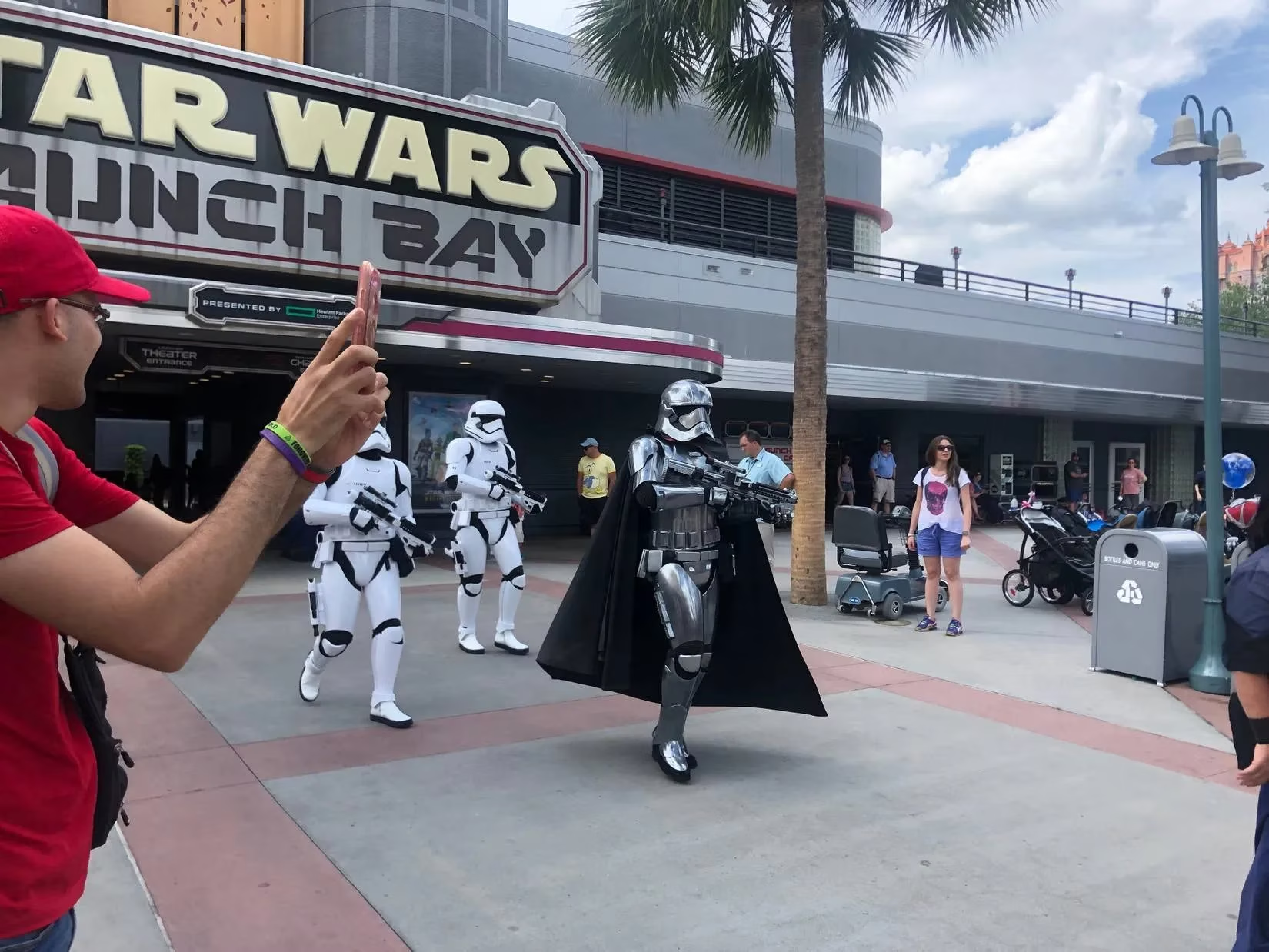
The red pop-up notices on Walt Disney World's website were like digital tombstones, coldly stating the finality: "The last day to experience (this) is September 24." Star Wars Launch Bay, my personal sanctuary for all things galactic—a place where I'd stood in awe of Darth Vader's menacing presence and marveled at detailed prop replicas—was being retired. Nearby, the joyous, chaotic energy of Disney Jr. Play and Dance!, where my youngest niece first discovered the magic of live performance, would also fall silent. Disney's press release framed it as necessary evolution, a transformation inspired by the wonders of animation, much like the Emmy Award-winning short film Once Upon A Studio. The planned new experience promised to be a "place of pure magic" where animation would be brought to life. Yet, knowing this magic would sprout from the ashes of my old haunts felt bittersweet, like watching a beloved, dog-eared storybook be carefully pulped to make paper for a new, shinier edition.
The online reaction was a tapestry of emotion as complex and layered as an animator's light table. On platforms like the r/disneyparks subreddit and X, the community fractured. Some greeted the news with unbridled enthusiasm. "It's been a minute since I've been genuinely excited by a Disney announcement, this is great!" one user exclaimed, seeing the change as a long-overdue refresh. Others pointed out the perceived redundancy of Star Wars areas within the park, with one X user noting, "Almost like we didn't need 3 Star Wars areas in the same park." For them, the closure of Launch Bay was "a good thing," a necessary pruning to make the park stronger. Yet, for every cheer, there was a sigh of nostalgia. "Absolutely not," protested another fan, mourning the personal memories attached to Launch Bay. Some simply posted sad faces or heartbreak emojis, a silent digital vigil for experiences past. The iconic Sorcerer's Hat topping the new building became a lightning rod for debate on Instagram, symbolizing either a welcome return to classic Disney or an unwelcome visual intrusion, depending on who you asked.
Disney, aiming to reassure, detailed the incoming wonders. The new attraction, now a reality here in 2026, truly is a multi-sensory playground. They promised, and delivered, a space where "kids and kids at heart can laugh, draw, dream, and explore." The building, crowned with Mickey's Sorcerer Hat, does seem to "cast a spell with pixie dust." The features they listed were designed to bridge generations:
-
Portraits that "come to life": Walking canvases where characters step out of their frames.
-
Drawing lessons: Guided tutorials that make you feel, for a moment, like a Disney animator.
-
Indoor playground: A creatively designed physical space for imaginative play.
-
Musical instruments: Interactive stations that let you compose your own Disney-esque melodies.
While the specific Disney Jr. stage show ended, the company assured a "fresh" replacement would take its place on the soundstage, and other staples like The Little Mermaid — A Musical Adventure would continue. "All of those places to explore and create, and we haven't even talked about character greetings… and there are lots!" Disney proclaimed, emphasizing the new, collaborative ways for families to play together. Stepping into the space now, it feels less like a simple attraction and more like a living, breathing storyboard where every guest can add their own panel to the narrative.
Reflecting from the present, the transition feels like the park itself underwent a metamorphosis. The closure of Launch Bay and Disney Jr. was the cocoon stage—awkward, confined, and mourned by some. The emergence of The Magic of Disney Animation is the butterfly: dazzling, new, and focused on a different kind of flight. For fans like me, it was a lesson in the park's core philosophy: that nostalgia must eventually make room for innovation. The old attractions were like comfortable, familiar melodies in a well-worn songbook. The new experience is a symphony hall where you're invited to help compose the music in real-time. Time has told its story: the new attraction has performed wonderfully, becoming a cornerstone of the park's identity. Yet, sometimes, in a quiet corner near a singing portrait or while watching a child's concentrated frown during a drawing lesson, I still catch the faint, ghostly echo of a lightsaber hum or a familiar preschool dance tune—a gentle reminder that in Disney's endless reinvention, every ending is carefully preserved within the magic of a new beginning.