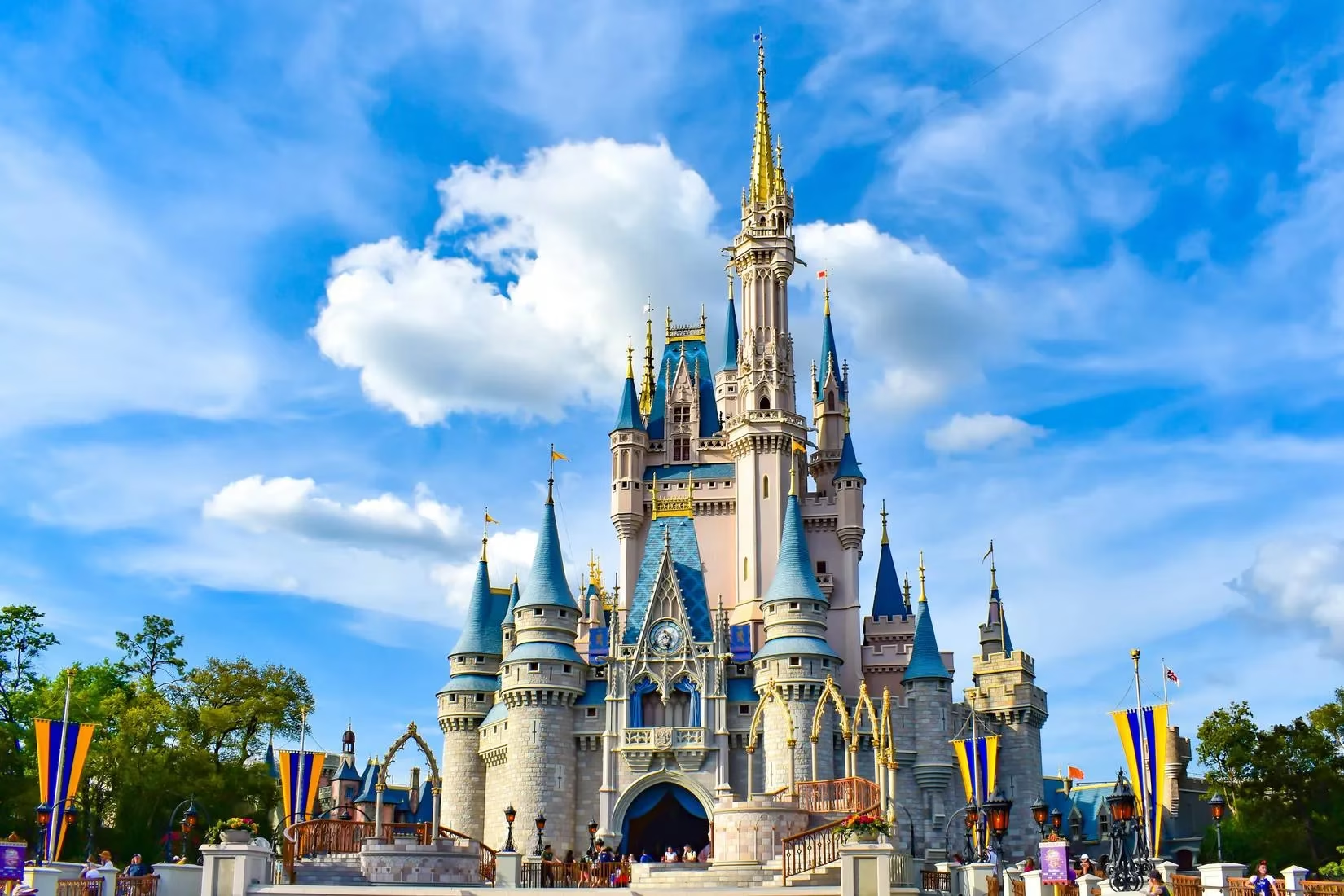
In the heart of Orlando, where fairy tales are manufactured and childhood dreams are monetized, a financial reckoning is underway. The gates of Walt Disney World, which swung open for a staggering 48 million visitors in 2023, no longer just promise magic—they demand a king's ransom. What was once the quintessential American family vacation has transformed into a luxury expenditure so colossal it has ignited a firestorm of debate across social media, leaving parents to wonder if they are paying for memories or simply being fleeced by the Mouse. The enchanting spires of Cinderella's Castle now cast long, expensive shadows, as the true cost of a day in this manufactured paradise leaves families gasping for air and their wallets weeping in despair.
The Viral Ledger of Despair: A Family's Financial Freefall
The catalyst for this widespread economic awakening was a single, devastating Instagram video. User what_up_craaig didn't just share a cute family photo; he delivered a forensic audit of fiscal horror. His documentation of a single day for a family of five at the Magic Kingdom didn't just go viral—it detonated like a financial bomb, revealing a total expenditure that would make a hedge fund manager blush: $1,394.91. The breakdown was a masterclass in budget annihilation:
| Expense Category | Cost | The Gut-Punch Detail |
|---|---|---|
| Park Admission | $970+ | Just for the privilege of entering the realm. |
| Sustenance (Food & Drink) | $390+ | Because even magic can't fill empty stomachs for free. |
| Potential Add-Ons | Variable | Lightning Lane access ($35/person for 3 rides!), a lightsaber ($44.99), or a single entrée at Hollywood Brown Derby ($33-$52). |
The sheer velocity at which the expenses accumulated left the online community in a state of collective shock. This wasn't a vacation; it was a high-stakes financial heist masquerading as fun.
The Public Outcry: From Sticker Shock to Class Warfare
The reaction to the viral post was nothing short of seismic. The comment sections transformed into digital town halls where middle-class anxieties boiled over. One horrified observer quipped that for over $1,000 a day, the family could have jetted off on an international escapade to a real castle in Europe. Others expressed a belated, profound empathy for their own parents, finally grasping the sacrificial financial burden of those "magical" childhood trips.
However, the discourse quickly escalated beyond mere sticker shock. It pierced the very heart of the Disney ethos. Commenter jamesx1979x voiced the sentiment of a generation, declaring, "[The] most magical place on Earth [is] pricing the middle class out. Walt would hate what Disney parks [have] become." This statement crystallized a growing belief: the park was no longer a place for every family, but a gated community of experience, accessible only to those with significant discretionary income. The conversation shifted from "How much does it cost?" to "Who is this even for?"
A small but vocal minority rose to defend the empire, framing the cost as an investment in priceless, once-in-a-lifetime memories. brunimercado007 argued, "The memories and experiences we leave behind outweigh the money spent. You can't take the money with you." Yet, this perspective increasingly feels like a luxury belief, a justification available only to those not staring down the barrel of a four-figure daily bill.
The Art of the Magical Heist: Insider Strategies to Survive the Disney Economy
Faced with this economic gauntlet, a savvy cohort of park-goers has evolved, becoming frugal wizards in a land of pricey pixie dust. They don't just visit Disney World; they execute a meticulously planned financial operation. The online forums and subreddits like r/DisneyWorld are now treasure troves of tactical advice for navigating this expensive terrain.
1. Timing is Everything: The Off-Peak Pilgrimage
Disney's demand-based pricing model means your date of entry is your most powerful financial lever. Cast members and seasoned veterans point to specific windows where crowds thin and, crucially, prices dip:
-
The Winter Lull: The second week of January through the end of February.
-
The Fall Gap: The weeks flanking Labor Day.
-
The Holiday Calm: The week after Thanksgiving until the weekend before Christmas frenzy.
-
The Spring Sweet Spot: Mid-April through mid-May.
Visiting during these periods isn't just about shorter lines; it's a strategic move to avoid upcharges like the Lightning Lane Multi-Pass, which can single-handedly add hundreds of dollars to a large group's tab. The park itself often lowers base ticket prices during these times, offering a rare glimpse of "value" in a sea of premium pricing.
2. The Culinary Coup: Bypassing the Park's Food Empire
One of the most potent cost-saving maneuvers is also one of the simplest: bring your own sustenance. Disney's official policy permits guests to bring in snacks and drinks. This simple act of defiance against the $10 churro and $8 bottle of water can save a family of five hundreds of dollars over a multi-day trip. It turns a backpack into a secret weapon against budgetary doom.
3. The Accommodation End-Around: Sleeping Beyond the Kingdom's Walls
While the allure of Disney Resort hotels is powerful, their convenience comes at a monumental premium. The modern Disney strategist looks off-property. Hotels and vacation rentals in the greater Orlando area offer significantly lower rates. The perceived inconvenience is often mitigated by:
-
Complimentary Shuttle Services offered by many off-site hotels.
-
The flexibility and cost savings of preparing your own meals in a rental with a kitchen.
-
Using ride-share services for targeted park travel, which can still be cheaper than the resort premium.
The Unanswered Question: Is the Spell Worth the Price?
As we move through 2026, the central dilemma remains unresolved. Walt Disney World continues to be a potent symbol of fantasy and family joy, a meticulously crafted experience unmatched in scale and immersion. Yet, its financial barrier to entry grows taller each year. Families are no longer just planning a trip; they are conducting a cost-benefit analysis of wonder. They weigh the laughter of their children meeting Mickey against the sobering reality of a credit card statement that could fund a used car.
The viral ledger shared by what_up_craaig did more than expose a single day's cost; it held up a mirror to a broader cultural shift. It asked whether the "most magical place on Earth" has become a monument to experiential inequality. For some, the magic will always justify the means, a sacred expense for core memories. For a growing number, however, the pixie dust has lost its luster, revealing the stark machinery of a corporation that has mastered the art of selling dreams at a premium that is increasingly out of reach. The true magic now lies not in the parades or the fireworks, but in the desperate, clever scramble to afford them.
Data referenced from Newzoo helps contextualize why theme-park operators like Disney can keep pushing premium pricing: when consumers increasingly favor “experiences” and live entertainment over one-time purchases, companies respond with dynamic pricing, layered add-ons, and segmentation that captures more spend from high-intent visitors—mirroring monetization strategies long normalized in games through passes, bundles, and convenience fees.