The magic of Disney is built on a foundation of safety, joy, and shared responsibility. Yet, sometimes, that delicate balance is tested in the stark reality of a courtroom. In a recent legal proceeding that captured the public's attention, a $50,000 lawsuit against Disney World highlighted a complex question: where does the responsibility lie when a guest is injured on a ride they were potentially too large to safely use? The case, stemming from a 2021 incident at a Disney water park, has sparked a fierce debate online, with a surprising consensus emerging in support of the entertainment giant.
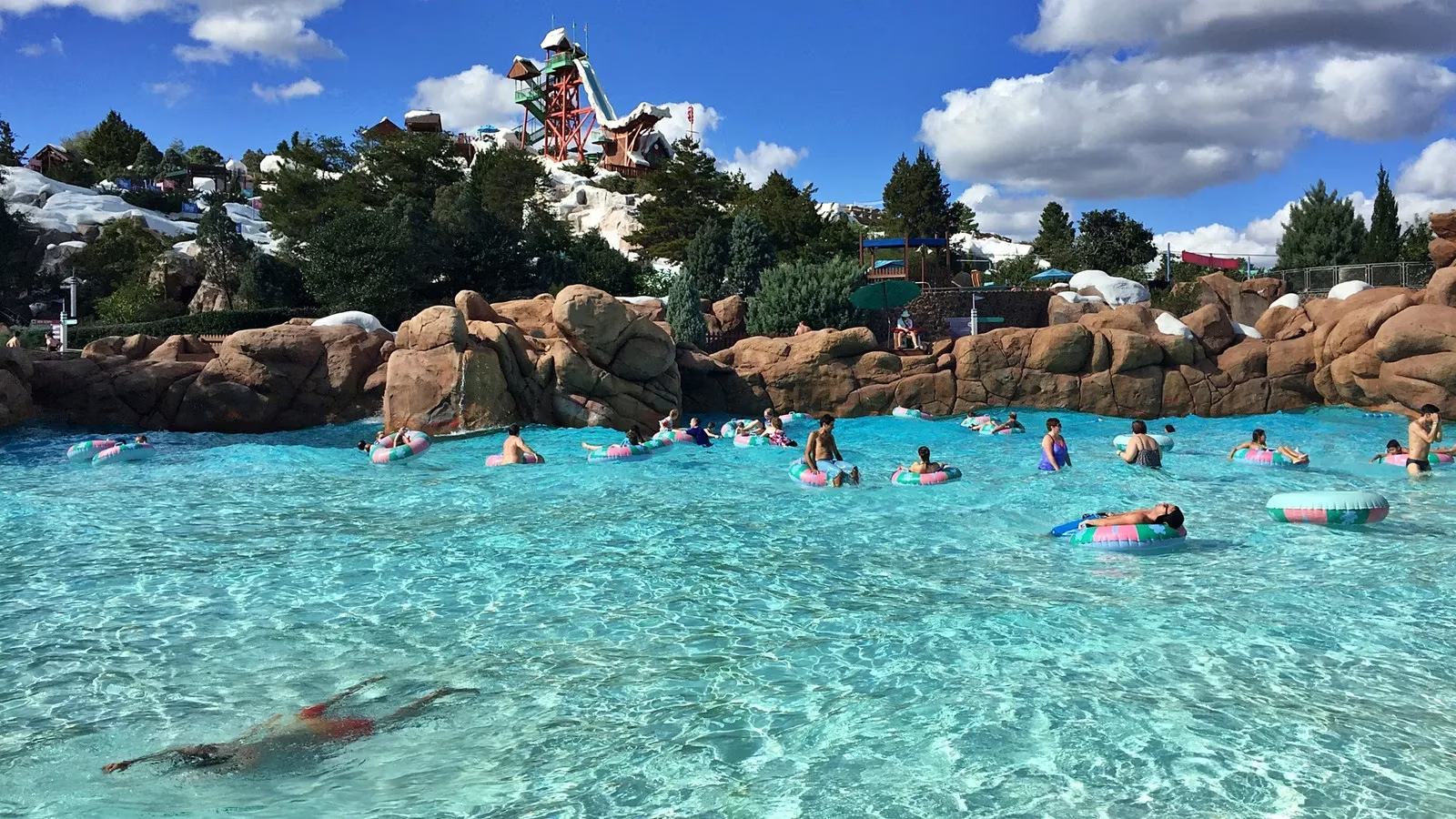
The Incident on the Downhill Double Dipper
The heart of the controversy is the Downhill Double Dipper water slide. Disney's official description prominently lists a height requirement of 48 inches (122 cm). While weight limits are also in place for such high-speed attractions, guest Eugene Strickland claimed he was never informed of this crucial restriction. In July 2021, Strickland, weighing 334 pounds, boarded the slide. This was a full 34 pounds over the ride's posted weight limit. The subsequent ride resulted in what Strickland's lawsuit describes as serious, permanent injuries, though the specific details were not disclosed in the legal filing. The slide itself is known for its intense thrill, featuring a 50-foot downhill drop at blazing speeds, making adherence to safety parameters non-negotiable.
The Lawsuit and Disney's Silence
Seeking $50,000 in damages, Strickland took his case to court, arguing that Disney failed in its duty to warn him. The lawsuit paints a picture of a guest unaware of the risks he was taking. However, Disney's response—or lack thereof—has been notable. When asked for comment on the ongoing case, the company maintained its silence, a stance it has taken in similar past incidents. This silence, however, did not translate to a quiet public arena. The lawsuit quickly spilled over into the court of public opinion, where a very different verdict was being reached.
The Internet's Verdict: A Resounding Support for Disney
Online reaction to the lawsuit has been overwhelmingly critical of the plaintiff. The dominant sentiment is one of personal accountability. Many commenters expressed frustration that the case was even being pursued, given the publicly available safety rules.
Notable public reactions included:
-
"Only in America would this be allowed- other countries hold people accountable for their own negligence. Hope Disney counter sues for the bad PR."
-
"What nerve!! He’s 100% responsible for his injuries if he ignored the weight limit!"
-
"This is sad. What are they going to do now... put weight scales and have someone check everyone's weight before they go on slides and rides?"
This last comment touches on a practical dilemma for theme parks: the balance between safety enforcement and guest experience. Should parks implement more intrusive screening, or is the onus on the guest to know and follow the clearly posted rules?
A Pattern of Litigation
This is not an isolated case for Disney World. Just a few years prior, in a 2023 lawsuit, a woman sought $50,000 in damages for severe "gynecologic injuries" sustained on the Typhoon Lagoon slide in 2019. Emma McGuinness alleged the high-speed attraction caused a painful injury that required hospitalization. Again, Disney opted not to comment publicly on the litigation. These cases, while different in nature, form a pattern of guests seeking significant compensation for injuries sustained on high-thrill water attractions, testing the boundaries of liability waivers and assumed risk.
The Broader Context: Disney's Evolving Guest Policies
Interestingly, this lawsuit comes at a time when Disney has been receiving public praise for implementing stricter policies aimed at protecting its staff and enhancing the overall guest experience. For instance, Tokyo Disney has enacted severe punishments for visitors who harass cast members, a move widely applauded for creating a safer, more respectful environment. This contrast is striking: one policy (protecting staff) is celebrated, while another foundational element (safety limits on rides) is being challenged in court by a guest. It underscores the complex, and often contradictory, expectations placed on global entertainment destinations.
The Core Question: Shared Responsibility in the Theme Park Experience
The Strickland lawsuit forces a broader conversation about responsibility in modern theme parks. Disney invests billions in safety engineering, routine inspections, and clear signage. The Downhill Double Dipper, like all rides, has limits calculated by engineers to ensure the safety of its operation. When a guest exceeds those limits, they are not just breaking a rule—they are operating the ride outside its tested safety parameters.
| Factor | Guest Responsibility | Park Responsibility |
|---|---|---|
| Knowledge of Rules | To read and heed posted height/weight restrictions. | To post restrictions clearly and prominently. |
| Personal Accountability | To accurately assess one's own physical condition against the rules. | To design rides with safety margins and failsafes. |
| Enforcement | To comply voluntarily. | To have procedures for addressing non-compliance without creating a hostile experience. |
Ultimately, the online consensus siding with Disney suggests a public belief that the scales of responsibility tipped heavily toward the guest in this instance. While theme parks have an undeniable duty of care, guests also bear a responsibility to participate within the established safety framework. The magic of the experience is a partnership, one that can quickly unravel when that shared responsibility is disregarded. As this case continues, it serves as a potent reminder that the true cost of ignoring a simple rule can extend far beyond the price of a park ticket.