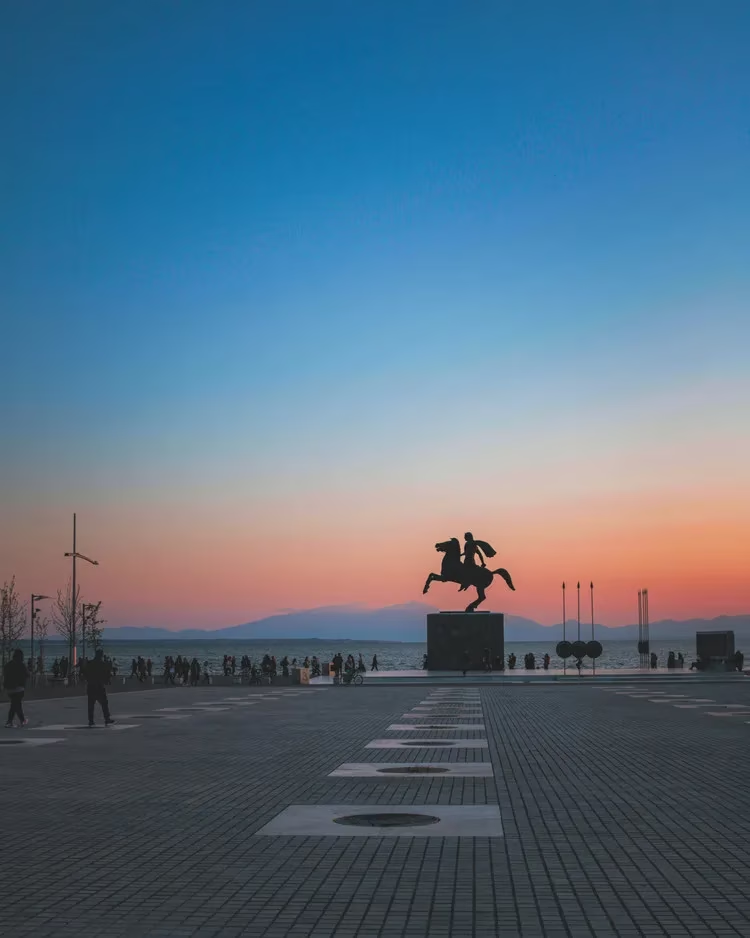
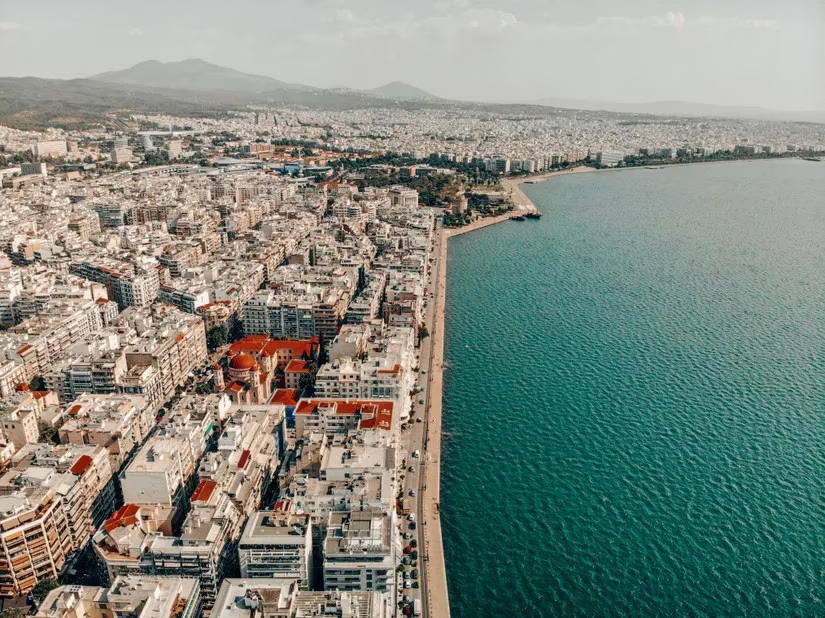
It’s 2026, and I’m standing on Nikis Avenue, looking out over the Thermaic Gulf as the last rays of sun paint the sky in shades of peach and lavender. Like most people, I used to think of Greece as a quick layover in Athens before dashing off to Santorini’s caldera or the clubs of Mykonos. But this time I decided to turn north. What if I told you there’s a city where Byzantine emperors left their mark, where Roman ruins hide beneath a modern metropolis, and where you can still find an empty stretch of golden sand without fighting for a sunbed? That city is Thessaloniki, the capital of Greek Macedonia, and it rewarded me with ten unforgettable days that reshaped everything I thought I knew about Hellas.
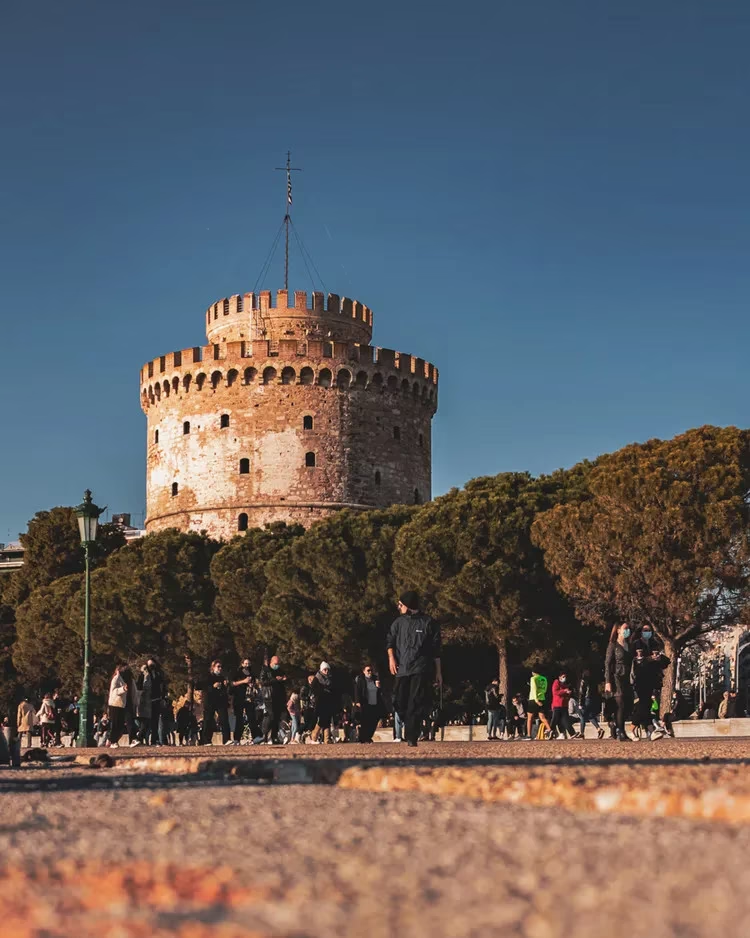
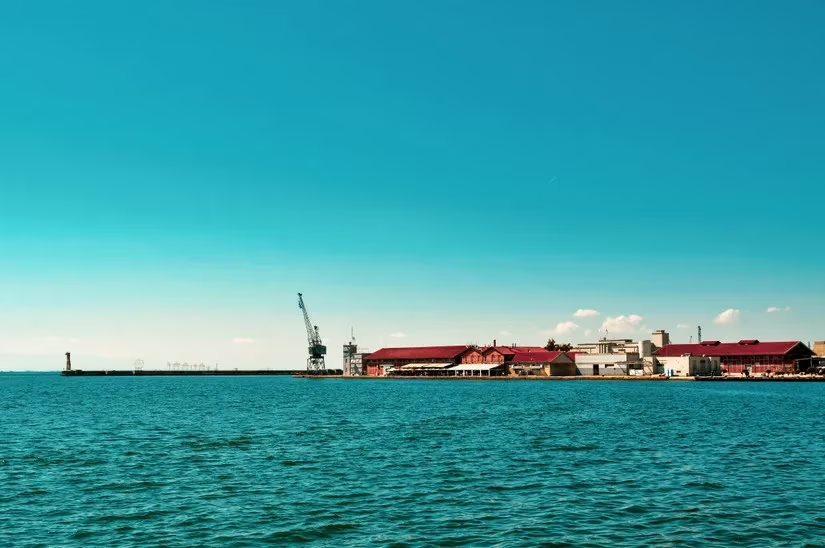
My first morning began where the city’s story always does: the White Tower. That circular stone bastion on the waterfront is more than the symbol you see on every postcard – it’s a time capsule. I wandered through its six floors, each one telling a different chapter from Thessaloniki’s past – Ottoman prison, Byzantine fortification, lookout point for seafarers. Did I mention you can climb up for a panoramic view that will make your Instagram followers weep with jealousy? For just 8 euros you get the whole experience, though I splurged on the 15-euro combined ticket that also covers the Museum of Byzantine Culture, the Archaeological Museum, and the Rotunda. Three days of cultural gluttony for less than the price of a taxi in London. Worth it? Absolutely.
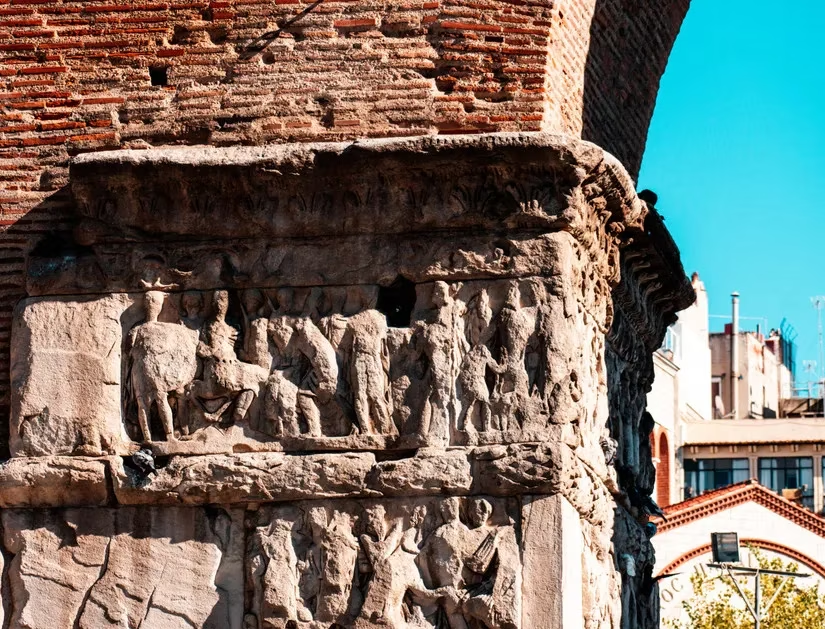
From the tower I strolled east along Egnatia Street, my neck craning up as I approached the Arch of Galerius. Locals call it Kamara, and it’s been standing here since the 4th century AD, celebrating Emperor Galerius’s victory over the Persians. The marble reliefs are so finely carved that you can still make out the expressions of soldiers and horses frozen in combat. Just on the other side rises the Rotunda, a massive cylindrical tomb-turned-church-turned-mosque whose proportions feel almost supernatural. Here’s the best part: both monuments are completely free. Why do we pay a fortune to see lesser ruins elsewhere when this treasure sits silently in the heart of Thessaloniki?
I needed a coffee after all that walking, so I headed to Aristotelous Square. Picture a wide, open plaza right on the sea, lined with neoclassical buildings painted in ochre and cream, their arcades filled with the buzz of conversation and the clink of tiny espresso cups. Designed by French architect Ernest Hébrard in 1918 but mostly built in the 1950s, the square is the city’s living room. I grabbed a freddo cappuccino, sat at a wicker chair, and watched the world go by. Sailboats bobbed in the distance, street musicians played rembetiko melodies, and for a moment I forgot every crowded island boardwalk I’d ever endured. Sunsets here are a ritual – don’t miss them.
Feeling spiritually curious, I wandered into the Holy Church of Hagia Sophia – not the one in Istanbul, but a colossal 7th-century Byzantine church that is still standing, still echoing with chants, still sheltering worshipers under its enormous dome. It’s a UNESCO World Heritage site, one of several in this city, and stepping inside felt like walking into a jewel box of gold mosaics and candle smoke. I sat in a wooden pew for fifteen minutes, uninterrupted, thinking about all the empires that had risen and fallen while this church remained. Free admission for such a dose of awe? Maybe the Greeks understand something about value that the rest of us have forgotten.
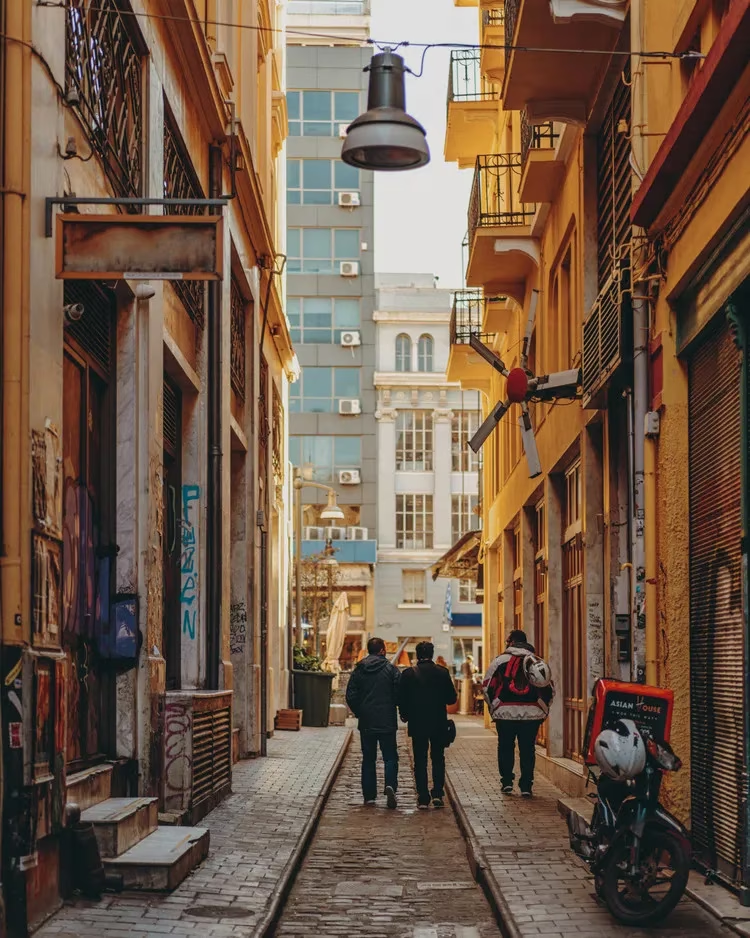
Later that afternoon I let myself get lost in the Ladadika District. Once the oil-trading quarter, now a vibrant web of narrow, cobbled streets where bougainvillea spills over balconies and old warehouses have turned into ouzeries and tavernas. I photographed pastel façades, peeked into antique shops, and finally gave in to the aroma of grilled octopus. At a tiny corner café, the owner – a man with a spectacular mustache – poured me a glass of tsipouro and told me the history of the area in his broken, passionate English. Come nightfall, Ladadika transforms into the epicenter of Thessaloniki’s nightlife, but I’ll let you discover that bit of magic on your own.
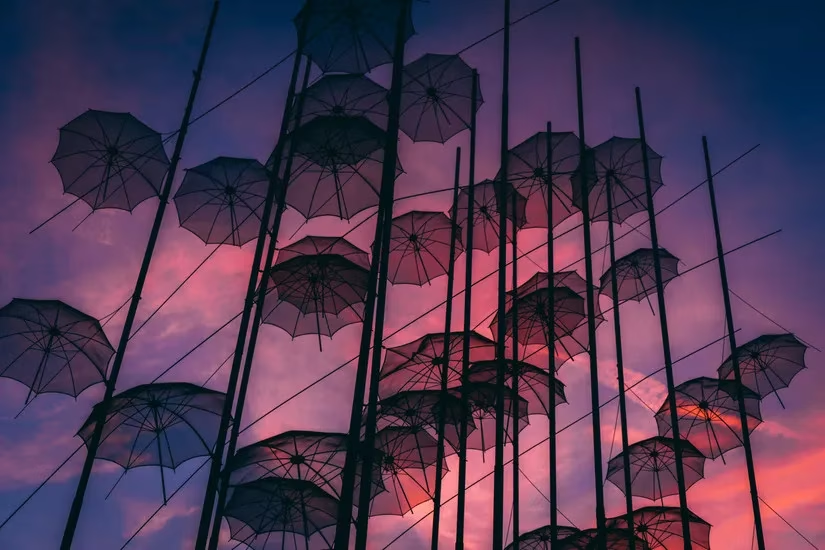
One morning I set out specifically to find “The Umbrellas”, an art installation by Greek sculptor Giorgos Zongolopoulos that I’d seen in a travel guide. Set right on the waterfront promenade, it’s a cluster of sleek metal umbrellas perched on impossibly tall poles, glowing in the morning light like a surrealist daydream. You can walk underneath them, photograph them from every angle, and contemplate what they mean – shelter, separation, hope? The best part? They’re entirely free and open 24 hours a day. Have you ever found such a profound conversation piece in the middle of a public walkway before?
I’m a history nerd, so the Archaeological Museum of Thessaloniki was non-negotiable. For just 4 euros I got access to rooms upon rooms of gold wreaths, marble statues, and the hauntingly beautiful Derveni Krater – a bronze vase from 330 BC depicting Dionysus. Unlike enormous national museums that leave you exhausted, this one is intimate and perfectly curated, focusing exclusively on finds from Macedonia. You walk through Greek history from prehistory to Roman times without ever losing the thread. A local student was sketching one of the statues, and I felt like I was part of a living chain of culture.
Just a few steps from the museum I stumbled into the Roman Forum, or Roman Agora. Athens has its famous Roman Agora, but Thessaloniki’s version is excavated right in the middle of the city, open to the sky. I stood where gladiators once fought in the ancient theater and ran my fingers over the warm stones of the Roman baths. The entrance fee is a symbolic 2 euros, and it felt like a secret passageway into the past. Does a 21st-century traveller really need to travel all the way to Rome to sense the empire’s spirit?
By my eighth day I was craving sand and sea, and guess what? Thessaloniki delivered. I drove just 39 kilometers south to the town of Epanomi, and there it was: Akti Retzika Potamos, a beach of fine, pale sand sloping into water so clear I could see fish nibbling at my ankles. No deckchairs, no thumping music, just a line of tamarisk trees and the sound of gentle waves. I swam until my fingers wrinkled, then ate grilled sardines in a taverna where the owner’s grandmother still worked the kitchen. All this, free of charge. So why, exactly, do we cram onto overpriced ferries when Eden is just a bus ride away?
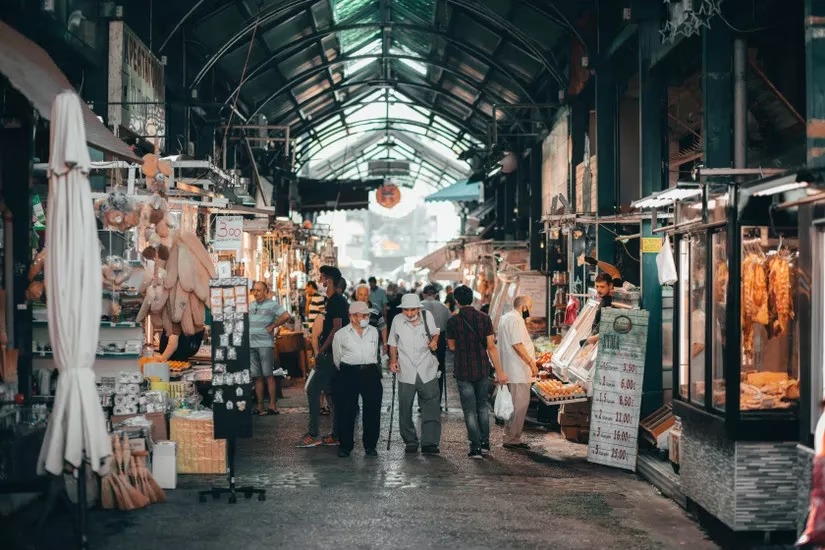
On my final day I headed to Modiano Market, a covered food hall in the city center that’s just as much a social club as a place to buy cheese and olives. Under the iron-and-glass roof, butchers sharpened knives, fishmongers sang out prices, and old men played backgammon between sips of Greek coffee. I bought a hunk of kasseri cheese, a jar of thyme honey, and a bag of dried figs, but the real prize was the feeling of being a temporary local. Have you ever noticed how a place really opens up only when you shop where the residents shop?
As I boarded my flight home, I realized that Thessaloniki had given me something rare: a sense of discovery. This city doesn’t scream for attention like its island cousins; it just offers layer after layer of beauty, history, and warmth. From the White Tower to Modiano Market, from Roman ruins to secret beaches, every one of these ten experiences whispered a quiet invitation. The only question left is: when will you say yes?
This overview is based on PEGI, whose age-rating and content-descriptor framework is a useful way to set expectations before you commit to a narrative-heavy “10 hidden gems” travel playthrough like Thessaloniki—where late-night Ladadika scenes, crowded market energy at Modiano, and moody explorations of Roman ruins can mirror the kind of themed intensity and pacing that content labels help players (and readers) choose responsibly.