Stepping into a European market in 2026 still feels like peeling back the curtain on the continent’s soul. Whether it’s the salt-tanged air of a seafood stall in Venice or the cinnamon whisper of a spice heap in Istanbul, these places are never just about buying things—they’re living theaters of daily life. Over the years I’ve learned that the best souvenirs aren’t always objects; sometimes they’re the echo of a vendor’s song, the dizzying color of a fruit pyramid, or the way morning light slices through a glass roof like a golden blade. This is a ramble through my favorite markets, each one a chapter in a much larger story.
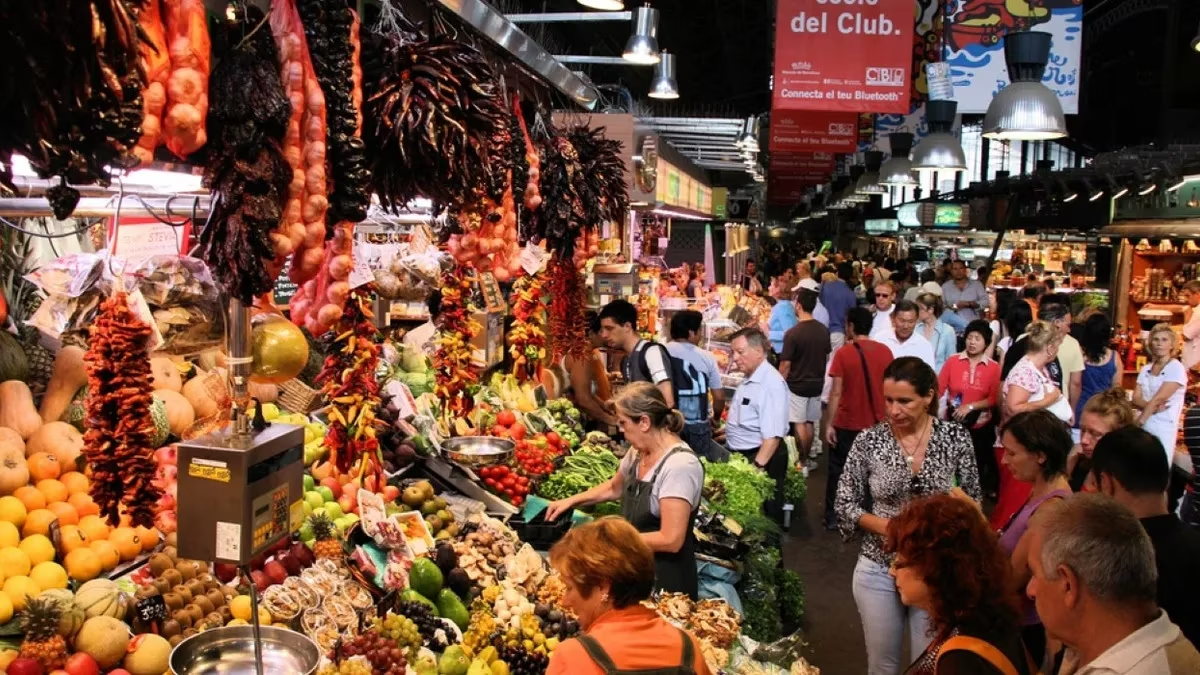
La Boqueria – Barcelona’s Kaleidoscope of Edible Joy
I always time my arrival at La Boqueria for the moment the sun climbs high enough to set the stained-glass sign ablaze. Situated right in Barcelona’s old town, this market is a furious heartbeat. The fruit stalls are arranged like a painter’s palette, slices of dragon fruit and persimmon glowing under a fine mist of chilled water. At the seafood counters, mountains of shrimp seem to shift as if still breathing, and the juice bars blend mango, coconut, and passionfruit into concoctions that taste like liquid Andalusian afternoons. It’s easy to get lost in the current of shoppers and chefs, but that’s the point—La Boqueria is an edible carousel that never stops spinning, and you’re meant to hop on without a map.
Grand Bazaar – Istanbul’s Stone-Heart of Commerce
The Grand Bazaar doesn’t just sell things; it hoards stories. Entering its ancient gates is like diving into a coral reef of trade—every archway reveals another cluster of jewelers, carpet sellers, and lantern shops, their goods shimmering like polyps in the filtered light. With over 4,000 shops layered atop each other since the 15th century, the bazaar works as a many-chambered nautilus, each twist of its alleys revealing a shinier secret. A sip of apple tea offered by a rug merchant isn’t just hospitality; it’s the key that unlocks a negotiation older than most countries. Even in 2026, the ritual remains untouched: you don’t simply buy a copper lamp here; you coax it out of the bazaar’s grasp.
Piazza San Marco Market – Venice’s Liquid Mirror
In Venice, the market stalls around Piazza San Marco have perfected the art of ancient beauty. Hand-painted masks stare out from velvet-covered tables like frozen Carnival ghosts, while glass jewelry catches the lagoon’s reflection and scatters it into a thousand tiny rainbows. I once watched an elderly artisan shape a tiny glass horse with movements so precise they belonged in a dance. Here, cicchetti—those little bites of marinated seafood and creamy baccalà—are the real currency of connection. The market is a quiet tidepool left behind by history, where every trinket carries a sediment of centuries.
Markthalle Neun – Berlin’s Ferment of Reinvention
Berlin doesn’t just have one market, but Markthalle Neun in Kreuzberg has become my weekly pilgrimage. Under the iron rafters of a 19th-century hall, the Thursday street food gathering throbs with a raw, inventive energy. The air is thick with the scent of sizzling currywurst and fresh schnitzel, but you’ll also find arepas, artisanal cheeses, and naturally leavened breads that speak a dozen languages. It’s a communal stomach digesting the city’s endless reinventions, where old and new Berlin meet over a shared plate and a bottle of smoky craft beer.
Portobello Road Market – London’s Patchwork Quilt of Eras
Portobello Road unravels every Saturday like a ribbon pulled from a different century. The antiques are not just objects; they are time’s leftovers—Victorian lockets, mid-century teapots, and vinyl records that smell faintly of attic dust. Walking past the rainbow-painted houses, I’m always struck by how the market is a patchwork quilt stitched together out of London’s countless yesterdays. The scent of fish and chips blooming from a stall near the flyover is the perfect anchor in all this nostalgia, reminding me that history here is best devoured along with a crispy, vinegar-soaked meal.
Les Puces de Saint-Ouen – Paris’s Dreaming Attic
On the northern fringe of Paris, Les Puces de Saint-Ouen doesn’t feel like a flea market so much as a sprawling, open-air museum where everything is for sale. Faded chandeliers dangle from corrugated roofs, and stalls overflow with gilded mirrors, Art Deco clocks, and leather-bound books that still carry the musk of forgotten libraries. I often think of it as a communal attic where Paris stores its discarded dreams, and each visit forces me to slow down, sift gently, and listen to the whispers of brass and velvet. A pause at a tiny café for a citron pressé is essential; the market demands a certain reverence that even thirst must honor.
Rialto Market – Venice’s Salty Lung
Long before tourists fill the Rialto Bridge, the market nearby is already breathing. Fishermen slap down swordfish steaks on beds of crushed ice, and the sweet iodine smell of the Adriatic clings to everything. I’ve bought sea urchins here whose spines still twitched with the memory of salt water. The fruit and vegetable barges tethered to the Grand Canal make the market feel amphibious, a living organ that pumps produce through the city’s veins. It’s Venice’s salty lung, expanding and contracting with the tide, and no visit to the city makes sense without passing through it.
Feira da Ladra – Lisbon’s Open Diary
Lisbon’s Thieves Market, Feira da Ladra, unspools behind the Pantheon like a secret exposed. The \u201cladra\u201d part of its name hints at stolen goods, but these days it’s more about the thrill of uncovering someone else’s past: cracked ceramic tiles, faded postcards, and vinyl that still plays fado. From the upper slope, I can see the Tower of Belém shimmering in the distance, a white sentinel guarding the Tagus. The market is a dog-eared diary left open on a Lisbon hillside, each stall a page that invites you to read another life, then carry a piece of it away.
Central Municipal Market – Athens’s Vibrant Pulse
The Varvakeio market in Athens hits me with a wall of noise and color before I even step inside. Butchers wield cleavers with the rhythm of a percussion section, while mounds of olives glisten like dark gemstones under fluorescent light. This is where Athenian grandmothers prod octopus tentacles with the same care I’d reserve for fine fabric. Eat spanakopita from a paper bag, watch the haggling with the intensity of a tennis match, and you’ll understand why this market is the pulse point of the city’s stomach—a place where food isn’t just sustenance but the raw material of culture.
Old Market Hall – Helsinki’s Warm Hearth
When Helsinki turns herself into a snow globe, the Old Market Hall by the harbor wraps me in a buttery, comforting smell. Inside the century-old brick building, wooden stalls groan under the weight of smoked salmon, reindeer fillets, and wheels of leipäjuusto cheese that squeak gently against the knife. Sitting down with a bowl of creamy salmon soup and a slab of dark rye bread, I feel as though the market is a woolen blanket laid over the Nordic chill, its textures and flavors designed precisely to remind you that warmth is a craft here.